A residential swimming pool is frequently the second-largest electrical consumer in an entire home, surpassed only by whole-house central air conditioning. In an off-grid homestead or hybrid solar-powered residence, managing pool circulation is often the deciding factor between an affordable energy storage system and an overbuilt, multi-thousand-dollar battery bank.
Traditionally, pool sanitation demanded running a legacy single-speed 1.5 HP or 2.0 HP induction pump for 8 to 12 hours every day. Drawing a relentless 1,500 to 2,200 watts of continuous electrical power, these mechanical relics consume between 12 and 24 kilowatt-hours (kWh) per day.
For a homeowner living off the utility grid, dedicating 18 kWh of battery capacity purely to filter pool water requires adding three to four extra 48V 100Ah LiFePO4 server rack batteries—costing upwards of $5,000 in storage hardware alone.
Today, swimming pool energy management has divided into two advanced technological paths:
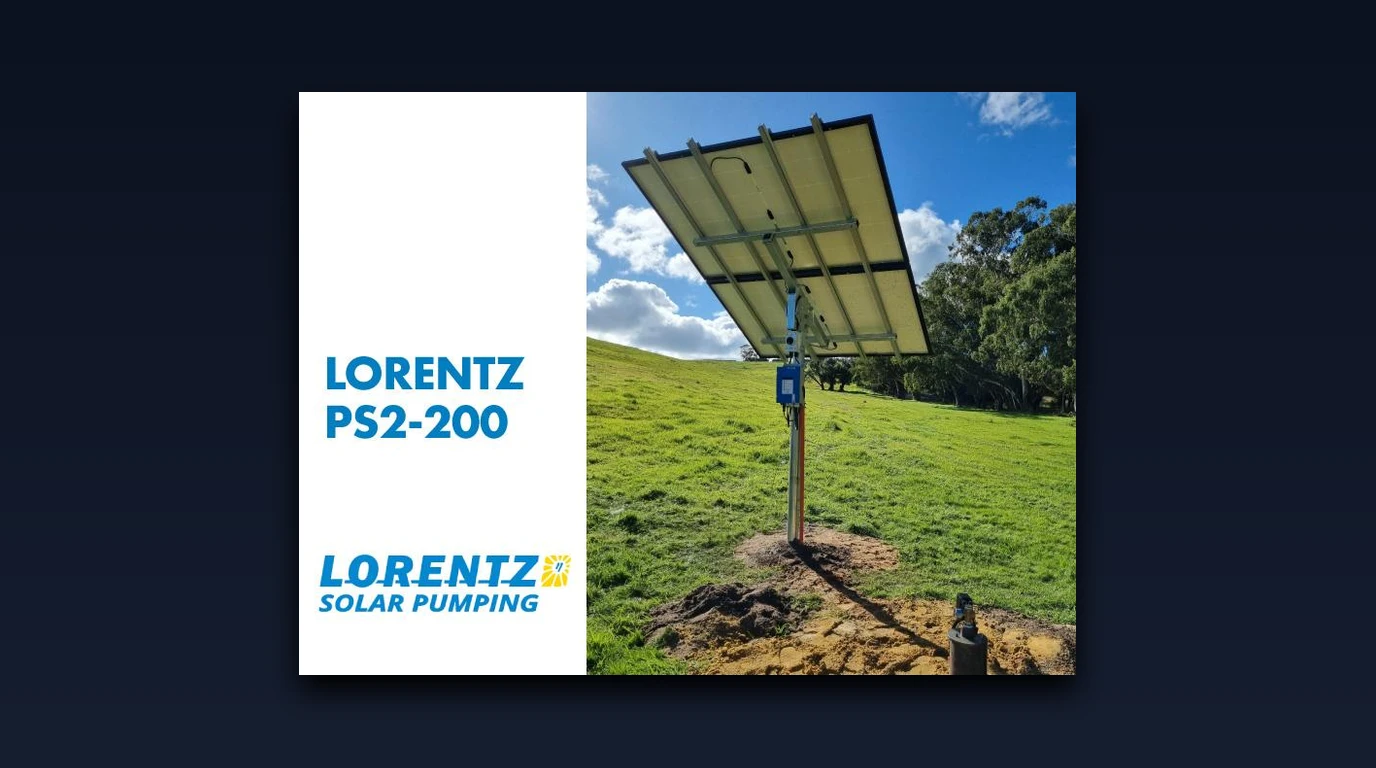
- The Dedicated DC Solar Pool Pump: Systems like the LORENTZ PS2-1800 or Eco-Worthy DC utilize brushless DC motors connected directly to a dedicated string of solar panels, completely bypassing batteries and inverters.
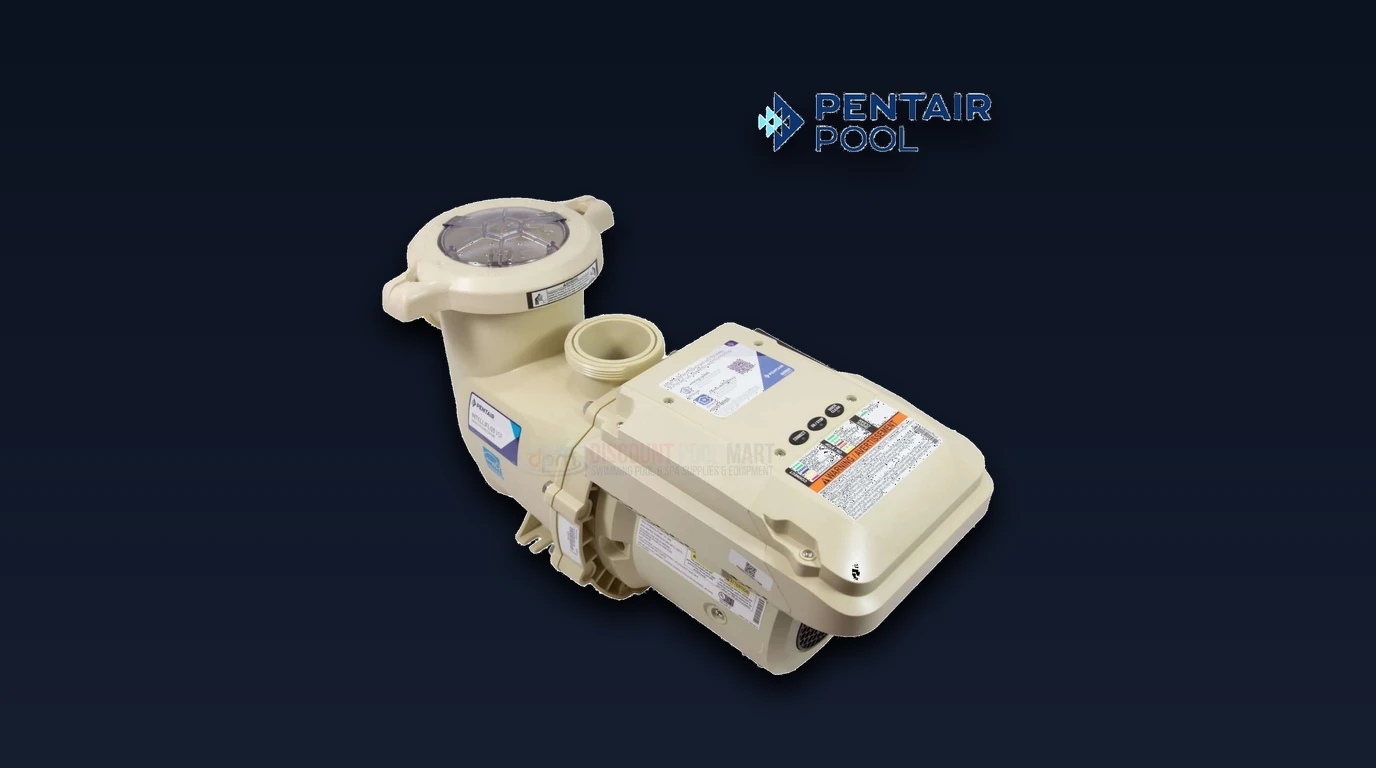
- The Modern Variable-Speed AC Pump on a Hybrid Inverter: Systems like the Pentair IntelliFlo3 VSF or Hayward TriStar VS run off the home’s main AC solar inverter, relying on the physics of hydraulic affinity laws to slash power consumption by up to 88% through low-RPM continuous circulation.
In this engineering guide, we dissect the fluid dynamics, calculate annual kWh energy budgets, audit equipment lifespans, and model 5-year return on investment (ROI) to determine which technology delivers superior financial and operational value.
Executive Summary: Off-Grid Pool Filtration Dilemma
+-----------------------------------------------------------------------------------+
|                        POOL PUMP SYSTEM ARCHITECTURE COMPARISON                   |
+-----------------------------------------------------------------------------------+
|  Architecture A: Dedicated DC Solar Pool Pump (LORENTZ PS2)                       |
|  [ Dedicated PV Array ] ===(High-Voltage DC)===> [ MPPT Driver ] ===> [ BLDC Pump ]
|  • 100% independent from home electrical system                                    |
|  • Zero impact on home battery bank or AC inverter sizing                         |
|  • Cannot run at night; flow drops during cloudy overcast weather                  |
+-----------------------------------------------------------------------------------+
|  Architecture B: Variable-Speed AC Pump on Hybrid Inverter (Pentair IntelliFlo3)   |
|  [ Roof PV Array ] ---> [ Hybrid Inverter ] ---> [ 240V AC ECM Pump @ 1,200 RPM ]  |
|                                |                                                  |
|                                v                                                  |
|                     [ Home LiFePO4 Storage ]                                      |
|  • Draws ultra-low continuous power (180W - 250W at low speed)                    |
|  • Complete automation: runs day or night, handles skimmers, heaters, and vacuums |
|  • Shares existing residential solar infrastructure; lower dedicated equipment cap|
+-----------------------------------------------------------------------------------+
Choosing between a direct-DC solar pump and an AC variable-speed pump comes down to system integration:
- If your pool equipment pad is located hundreds of feet away from your electrical panel, a dedicated DC solar pump eliminates expensive trenching and subpanel installation.
- If your pool equipment is already wired to standard 230V AC power and you operate a modern hybrid inverter (such as an EG4 FlexBOSS 18 or Sol-Ark 15K), an AC variable-speed pump delivers vastly superior hydraulic control, silent filtration, and automated sanitization at a fraction of the total system cost.
The Parasitic Energy Drain of Legacy Single-Speed Pool Pumps
To understand why variable-speed and solar pumps have revolutionized pool mechanics, one must examine the extreme inefficiencies of traditional single-speed induction pumps.
A standard 1.5 HP single-speed pump (such as the ubiquitous Hayward Super Pump or Pentair WhisperFlo) uses a single-phase induction motor spinning at a fixed rate of 3,450 RPM. At this speed, the pump draws approximately 1,850 watts (7.7 Amps at 240VAC) continuously.
+-----------------------------------------------------------------------------------+
|               SINGLE-SPEED PUMP PARASITIC ENERGY CONSUMPTION                      |
+-----------------------------------------------------------------------------------+
|  Daily Operating Window  |  Continuous Draw  |  Daily Energy  |  Annual Energy    |
+--------------------------+-------------------+----------------+-------------------+
|  6 Hours / Day (Minimum) |     1,850 W       |   11.1 kWh     |    4,051 kWh      |
|  8 Hours / Day (Standard)|     1,850 W       |   14.8 kWh     |    5,402 kWh      |
|  12 Hours / Day (Summer) |     1,850 W       |   22.2 kWh     |    8,103 kWh      |
+--------------------------+-------------------+----------------+-------------------+
At an average utility rate of 1,296 per year** in grid electricity.
In an off-grid scenario, supplying 14.8 kWh daily requires:
- An extra 4,000 watts of dedicated solar panels ($3,200 installed) to guarantee winter production.
- At least 15 kWh of usable lithium battery capacity ($4,500) to sustain filtration through consecutive overcast days.
- A heavy-duty inverter capable of absorbing the motor’s 5,500W to 8,000W Locked Rotor Amps (LRA) starting surge without tripping.
Hydraulic Affinity Laws: The Physics of Flow vs Power Consumption
The fundamental breakthrough behind modern variable-speed pool pumps is rooted in the Pump Affinity Laws—the mathematical principles governing centrifugal fluid dynamics.
       +-------------------------------------------------------------+
       |                  THE PUMP AFFINITY LAWS                     |
       +-------------------------------------------------------------+

         1. Volumetric Flow is directly proportional to Shaft Speed:
                             Q1 / Q2 = N1 / N2

         2. Total Dynamic Head is proportional to Speed Squared:
                             H1 / H2 = (N1 / N2)^2

         3. Mechanical Shaft Power is proportional to Speed CUBED:
                             P1 / P2 = (N1 / N2)^3
Because power demand varies with the cube of the motor speed (), minor reductions in RPM yield massive exponential reductions in electrical power consumption:
Speed Reduction and Exponential Power Drop
If a technician reduces pump motor speed by 50%—slowing the impeller from 3,450 RPM down to 1,725 RPM:
- Flow Rate (): Drops by 50% (e.g., from 60 GPM down to 30 GPM).
- Head Pressure (): Drops to 25% of baseline ().
- Power Draw (): Drops to 12.5% of baseline ().
Instead of consuming 1,850 watts, the motor consumes just 231 watts.
Motor Power (Watts)
  2000 +----------------------------------------------------------------------+
  1800 |                                                         * (3450 RPM) |
  1600 |                                                                      |
  1400 |                                                                      |
  1200 |                                                                      |
  1000 |                                              * (2800 RPM)            |
   800 |                                                                      |
   600 |                                                                      |
   400 |                              * (2200 RPM)                            |
   200 |              * (1400 RPM)                                            |
     0 +-------* (1000 RPM)---------------------------------------------------+
       1000   1400           1800           2200          2600   3000   3450
                                  Motor Speed (RPM)
The Filtration Advantage of Continuous Low Flow
To filter a 20,000-gallon pool, one full water turnover requires circulating 20,000 gallons:
- Single-Speed Strategy: 60 GPM 5.5 hours = 19,800 gallons. Power consumed: .
- Variable-Speed Strategy: 25 GPM 13.3 hours = 19,950 gallons. Power consumed: .
By running the pump twice as long at low speed, the pool achieves superior water clarity (slower filtration through sand or cartridge media captures finer particles) while slashing total daily electrical consumption by 76%.
Dedicated DC Solar Pumps vs AC Variable-Speed Pumps on Inverters
Evaluating these two cutting-edge approaches requires comparing their underlying electrical architectures, installation complexities, and operational flexibilities.
Architecture Comparison Matrix
| System Parameter | Pentair IntelliFlo3 VSF (AC on Inverter) | LORENTZ PS2-1800 CS-37-1 (Direct DC Solar) |
|---|---|---|
| Motor Type | Permanent Magnet Synchronous ECM | Brushless DC (ECDrive BLDC) |
| Input Power Supply | 208V–230V AC Single-Phase (from Inverter) | 100V–375V DC (Direct PV String) |
| Speed Range | 450 RPM to 3,450 RPM (in 1-RPM increments) | Sun-tracking variable RPM (400–3,300 RPM) |
| Peak Flow Capacity | 130 GPM (at 3,450 RPM) | 95 GPM (at peak solar irradiance) |
| Low-Speed Power Draw | 180 Watts (at 1,200 RPM, ~30 GPM) | Direct solar; 0W grid/battery draw |
| Battery Requirement | Uses existing home LiFePO4 battery bank | Zero batteries required |
| Nighttime Operation | Fully programmable 24/7 schedules | Requires costly external AC Power Pack ($900+) |
| Automation Integration | Built-in WiFi, Bluetooth, automated valves | Relay inputs for mechanical float switches |
| Equipment Cost | 1,800 (Pump only) | 3,400 (Pump, MPPT Controller, PV) |
Annual Energy Consumption and Battery Capacity Benchmarks
To illustrate the true operational impact on a residential off-grid solar homestead, we modeled three identical 20,000-gallon pools operating in a sunny climate over a 365-day calendar year:
+-----------------------------------------------------------------------------------+
|                     ANNUAL ELECTRICAL ENERGY CONSUMPTION MODEL                    |
+-----------------------------------------------------------------------------------+
|  Configuration                  | Daily kWh Draw | Annual kWh | Battery Impact    |
+---------------------------------+----------------+------------+-------------------+
|  Legacy 1.5HP Single-Speed Pump |    14.8 kWh    |  5,402 kWh | Requires 15kWh+   |
|  (3,450 RPM for 8 hours/day)    |                |            | dedicated storage |
+---------------------------------+----------------+------------+-------------------+
|  Pentair IntelliFlo3 VSF on AC  |     4.2 kWh    |  1,533 kWh | Easily absorbed   |
|  (14h @ 180W + 2h @ 850W skimming)               |            | by home solar bus |
+---------------------------------+----------------+------------+-------------------+
|  LORENTZ PS2 Direct DC Solar    |     0.0 kWh    |    0.0 kWh | Zero drain on     |
|  (Daytime PV tracking only)     | (Direct Solar) |(From Grid) | home battery bank |
+---------------------------------+----------------+------------+-------------------+
Impact on Inverter Sizing
An AC variable-speed pump like the Pentair IntelliFlo3 utilizes a Permanent Magnet Synchronous Motor driven by an onboard variable frequency drive (VFD). Unlike older split-phase motors that pull violent locked-rotor surges, the VFD soft-starts the motor smoothly from zero RPM. Starting current never exceeds 10 Amperes AC, completely eliminating the inverter tripping and surge spikes that plague conventional pump installations.
Economic Payback Analysis: Capital Expense vs Long-Term ROI
Determining the most financially sound choice requires modeling total capital expenditures (CapEx) against long-term operational savings (OpEx).
+-----------------------------------------------------------------------------------+
|                     5-YEAR TOTAL COST OF OWNERSHIP (TCO)                          |
+-----------------------------------------------------------------------------------+
|  Financial Factor               | Pentair IntelliFlo3 on Inverter | LORENTZ PS2   |
+---------------------------------+---------------------------------+---------------+
|  Pump & Controller Hardware     |             $1,650              |    $2,450     |
|  Dedicated PV Array & Racking   |             $0 (Shared Array)   |    $1,100     |
|  Plumbing & Electrical Install  |              $450               |     $750      |
|  Initial Total Capital Cost     |            $2,100               |    $4,300     |
+---------------------------------+---------------------------------+---------------+
|  5-Year Electricity Cost (Off-Grid Solar Capacity Equivalent)      |               |
|  • Solar PV Depreciation Share  |              $320               |      $0       |
|  • Battery Wear Share (LiFePO4) |              $480               |      $0       |
+---------------------------------+---------------------------------+---------------+
|  5-YEAR NET COST OF OWNERSHIP   |            $2,900               |    $4,300     |
+---------------------------------+---------------------------------+---------------+
Financial Takeaways
- The Shared Inverter Advantage: For any property that already possesses an off-grid or grid-tied solar system with lithium battery storage, investing 1,400 over a 5-year timeline** while providing superior features.
- The Remote Pool Exception: If running a 240V AC trench line from the main house to a distant pool cabana costs more than $2,500 in wire, conduit, and excavation labor, the LORENTZ PS2 becomes the undisputed financial winner.
Final Engineering Verdict and Equipment Selection Matrix
Both technological approaches successfully eliminate the parasitic energy drain of obsolete single-speed pumps, but each serves a distinctly different architectural role:
+-----------------------------------------------------------------------------------+
|                        EQUIPMENT SELECTION GUIDE                                  |
+-----------------------------------------------------------------------------------+
|  CHOOSE THE PENTAIR INTELLIFLO3 VSF (AC ON INVERTER) IF:                          |
|  • The pool equipment pad already has 208V-240V AC power wired to it.             |
|  • The property operates a modern hybrid inverter (Sol-Ark, EG4, Victron).        |
|  • You want automated smartphone control, freeze protection, and scheduling.       |
|  • You need to run water features, spa jets, or suction pool cleaners at high RPM.|
|  • You prefer spending $1,650 upfront rather than $4,000+ on dedicated hardware.  |
|                                                                                   |
|  CHOOSE THE LORENTZ PS2 DIRECT DC SOLAR PUMP IF:                                  |
|  • The pool is located off-grid far from any electrical infrastructure.           |
|  • The home solar inverter system is already operating at maximum capacity.       |
|  • You want a dedicated zero-maintenance agricultural, resort, or community pool. |
|  • You refuse to cycle home lithium batteries for non-critical pool water pumping.|
+-----------------------------------------------------------------------------------+
For the modern solar homeowner, running an advanced variable-speed pump like the Pentair IntelliFlo3 at 1,200 RPM during peak midday solar production delivers the ultimate sweet spot: pristine pool water, zero noise, and virtually zero impact on your off-grid battery bank.