Achieving consistent, reliable domestic water pressure from a deep well is one of the most critical engineering hurdles in off-grid architecture. Unlike municipal homes connected to pressurized city mains, an off-grid home must extract groundwater from hundreds of feet below the surface, elevate it into the dwelling, and maintain household line pressure using limited battery reserves.
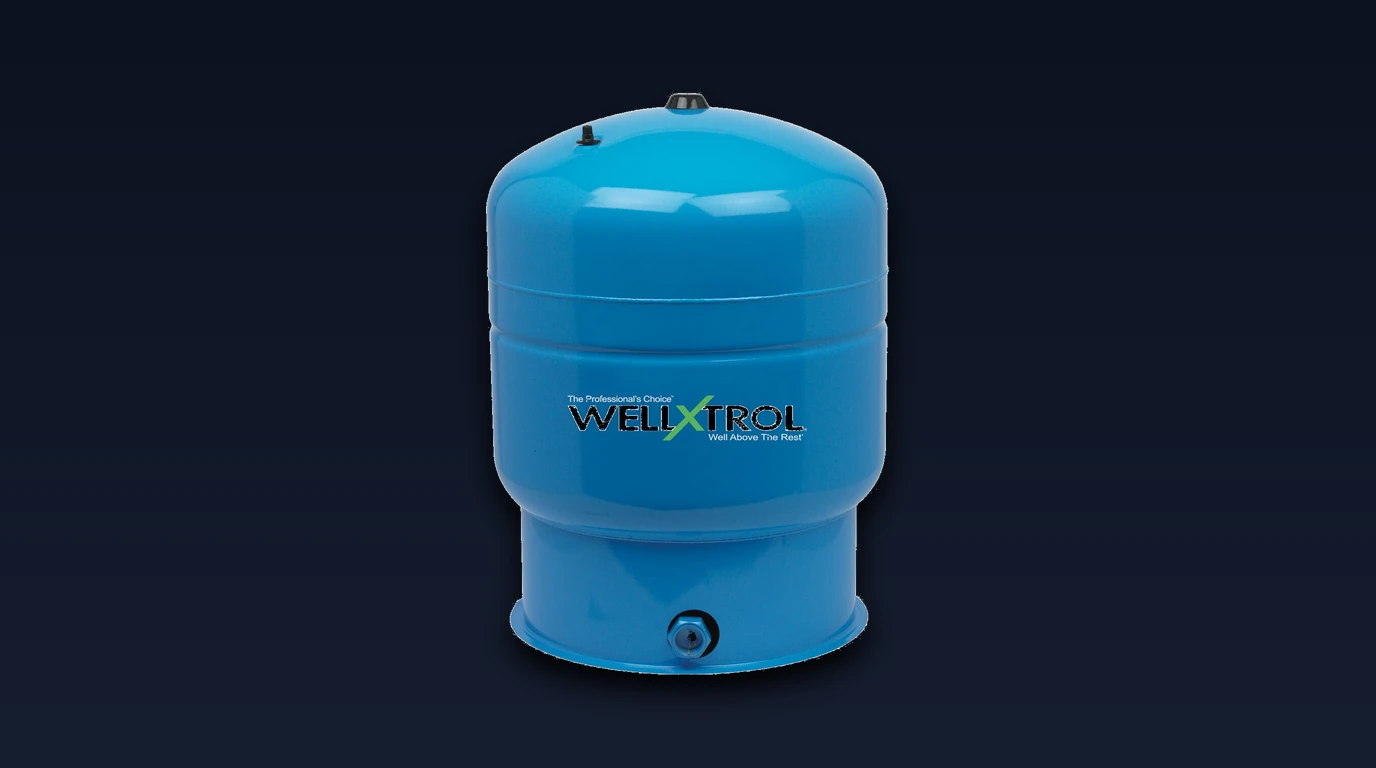
Historically, water systems relied on the conventional hydropneumatic tank: a single-speed submersible pump paired with a large steel bladder tank (such as an Amtrol Well-X-Trol) controlled by a mechanical pressure switch cycling between 30 and 50 PSI or 40 and 60 PSI.
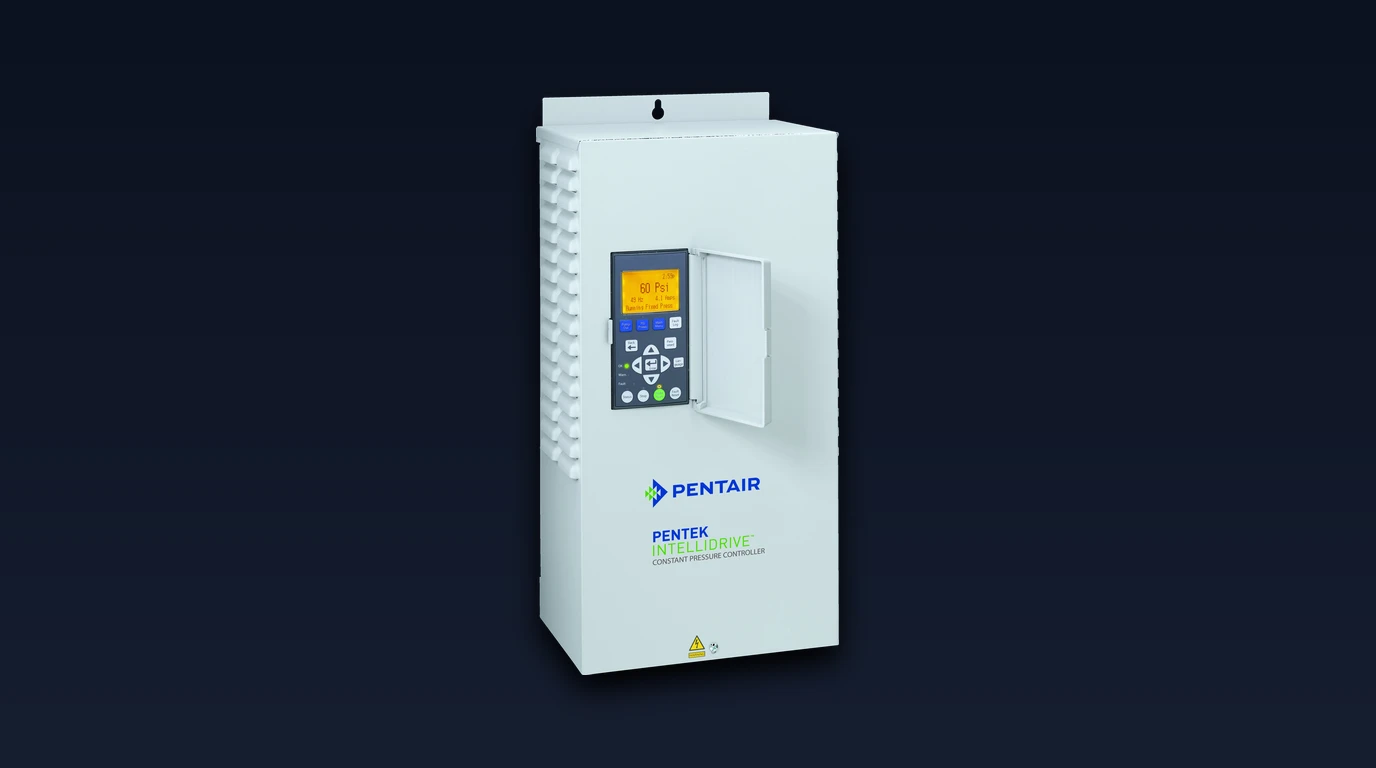
Over the past decade, municipal plumbing has shifted heavily toward Variable Frequency Drive (VFD) constant pressure systems, such as the Pentair Intellidrive or Franklin Electric SubDrive. By modulating motor RPM in real time to match instantaneous faucet demand, a VFD maintains an unyielding, rock-steady 50 or 60 PSI throughout the home while replacing a hulking 86-gallon tank with a tiny 2-gallon expansion vessel.
However, operating inside an off-grid solar environment fundamentally alters the engineering trade-offs. What represents a minor convenience on a 200A municipal electrical grid can introduce catastrophic vulnerabilities to a remote solar power system:
- Inverter overload trips caused by motor Locked Rotor Amps (LRA).
- Parasitic 24/7 standby tare losses siphoning battery storage.
- Vulnerability to lightning strikes traveling through rural well casings.
- Total Harmonic Distortion (THD) causing backup generators to stall.
This technical comparison analyzes the fluid dynamics, electrical surge profiles, long-term reliability metrics, and operational realities of both architectures to establish the superior off-grid engineering choice.
Executive Summary: Hydraulic Pressure Dynamics Off-Grid
+-----------------------------------------------------------------------------------+
|                        OFF-GRID PRESSURE ARCHITECTURE COMPARISON                  |
+-----------------------------------------------------------------------------------+
|  Architecture A: Conventional Large Bladder Pressure Tank (Amtrol Well-X-Trol)    |
|  [ Inverter AC Output ] ---> [ Mechanical 40/60 Switch ] ---> [ 1.0 HP Deep Pump ] |
|                                      |                                            |
|                                      v                                            |
|                       [ 44 - 86 Gallon Bladder Tank ]                             |
|  • ZERO standby parasitic electrical draw (0.0 Watts)                             |
|  • Full mechanical simplicity; immune to electronic lightning fry                 |
|  • Massive inductive inrush spike (8,000W - 10,000W LRA) on every cycle           |
+-----------------------------------------------------------------------------------+
|  Architecture B: VFD Constant Pressure Controller (Pentair Intellidrive)          |
|  [ Inverter AC Output ] ---> [ Solid-State VFD Drive ] ===> [ Modulated 3-Phase ]  |
|                                      |                                            |
|                                      v                                            |
|                        [ 2-Gallon Buffer Vessel ]                                 |
|  • Constant 55-60 PSI pressure; zero shower pressure fluctuation                  |
|  • Controlled 3-second soft-start; ZERO inverter starting surge                   |
|  • Continuous parasitic standby draw (15W - 25W = ~480Wh/day battery drain)       |
|  • Extreme susceptibility to lightning transients through well casing            |
+-----------------------------------------------------------------------------------+
The fundamental division between these systems is a classic engineering trade-off: mechanical buffer storage vs active electronic modulation.
Conventional Architecture: Large Bladder Pressure Tanks and Mechanical Switches
The conventional well pressure system has remained the bedrock of rural plumbing for over sixty years due to its unyielding mechanical simplicity.
       +-------------------------------------------------------------+
       |             CONVENTIONAL HYDROPNEUMATIC CYCLE               |
       +-------------------------------------------------------------+

         [ Submersible Well Pump ]
                     |
                     v
         [ Check Valve & Pitless ]
                     |
                     v
         +-------------------------------------------------------+
         | AMTROL WELL-X-TROL PRESSURE VESSEL                    |
         |                                                       |
         |   [ Compressed Air Cushion: Pre-charged to 38 PSI ]   |
         |   =================================================   |
         |   [ Heavy-Duty Butyl Rubber Diaphragm Barrier ]       |
         |   ~~~~~~~~~~~~~~~~~~~~~~~~~~~~~~~~~~~~~~~~~~~~~~~~~   |
         |   [ Pressurized Water Drawdown Zone (11 - 26 Gal) ]   |
         |                                                       |
         +-------------------------------------------------------+
                     |
                     v
         [ Square D Pumptrol Mechanical 40/60 Pressure Switch ]
                     |
                     v
         [ Household Plumbing Fixtures (Pressure fluctuates 40-60 PSI) ]
The Physics of Boyle’s Law and Usable Drawdown
A pressure tank does not pump water; it stores potential energy by compressing a captive air cushion. The relationship between air volume and pressure is governed strictly by Boyle’s Law:
Because water is an incompressible liquid while air is compressible, only a fraction of the tank’s physical volume represents usable water drawdown. In a standard 40/60 PSI configuration (where the pump turns on at 40 PSI and cuts off at 60 PSI with a 38 PSI air pre-charge):
| Pressure Tank Model | Total Tank Volume | Diameter x Height | Usable Drawdown (40/60 PSI) | Usable Drawdown (30/50 PSI) |
|---|---|---|---|---|
| Amtrol WX-202 | 20.0 Gallons | 15” x 32” | 6.0 Gallons | 7.0 Gallons |
| Amtrol WX-250 | 44.0 Gallons | 15” x 59” | 11.8 Gallons | 13.6 Gallons |
| Amtrol WX-302 | 86.0 Gallons | 26” x 47” | 26.0 Gallons | 30.1 Gallons |
| Amtrol WX-350 | 119.0 Gallons | 26” x 62” | 35.7 Gallons | 41.6 Gallons |
Operational Reality in an Off-Grid Home
In an off-grid home with an 86-gallon tank (Amtrol WX-302), a family can draw 26 full gallons of water before the well pump is forced to start. Flushing a toilet (1.6 gal), washing hands (0.5 gal), and filling a cooking pot can occur multiple times without triggering the pump motor.
However, the water pressure delivered to the showerhead is inherently dynamic: starting briskly at 60 PSI, gradually decaying to a softer 40 PSI, and then surging back to 60 PSI as the pump engages.
Constant Pressure Architecture: Variable Frequency Drive Modulation
Constant pressure systems eliminate pressure swings by replacing passive pneumatic air storage with an active solid-state microprocessor and an inverter-grade variable frequency drive.
       +-------------------------------------------------------------+
       |             VFD CONSTANT PRESSURE CLOSED LOOP               |
       +-------------------------------------------------------------+

         [ In-Line Pressure Transducer (0-100 PSI / 4-20mA Output) ]
                                     |
                                     v
         [ Pentair Intellidrive PID Microprocessor ]
                                     |
                                     v
         [ Pulse Width Modulated (PWM) Output: 30Hz - 80Hz Frequency ]
                                     |
                                     v
         [ Submersible Pump Motor Smoothly Ramps RPM to Match Flow ]
                                     |
                                     v
         [ Household Plumbing Fixtures: ROCK-STEADY 50.0 PSI CONTINUOUS ]
The Proportional-Integral-Derivative (PID) Control Loop
Instead of a mechanical spring switch, the VFD monitors line pressure dozens of times per second via a solid-state ceramic pressure transducer:
- When a homeowner opens a sink tap at 1.5 GPM, line pressure drops by 0.5 PSI.
- The transducer signals the VFD controller.
- The VFD synthesizes a smooth, low-frequency 35Hz AC waveform, turning the pump motor at a modest 2,100 RPM to deliver precisely 1.5 GPM at 50 PSI.
- When a shower or irrigation line opens (demanding 6.0 GPM), the VFD instantly ramps motor frequency to 55Hz or 60Hz (3,450 RPM), maintaining 50 PSI without hesitation.
- Because flow is actively matched to demand, the system requires only a tiny 2.0 to 4.5-gallon inline buffer tank (such as an Amtrol WX-102) to handle minor thermal expansion and drip leaks.
Inverter Electrical Impact: Hard-Start Surge Spikes vs Soft-Ramped Draw
For an off-grid power system governed by pure sine wave inverters, the difference in electrical starting dynamics between these two technologies is profound.
AC Amperes (240V)
  45 +                                 * (Conventional Start: 42A LRA Spike)
  40 |                                 |
  35 |                                 |
  30 |                                 |
  25 |                                 |
  20 |                                 |
  15 |                                 |
  10 |                                 |       *------------------* (VFD Running: 7A)
   5 |             *-------------------|-------/
   0 +-------------*-------------------*-------------------------------------+
     0 sec        0.5 sec            1.0 sec           2.0 sec          3.0 sec
                                    Time (Seconds)
The Conventional Starting Spike: Locked Rotor Amps (LRA)
A standard single-phase 1.0 HP submersible induction motor draws between 6.5A and 8.0A continuous full load at 240VAC (~1,800W). However, at the precise millisecond of startup (), the motor rotor is stationary.
Before counter-electromotive force (back-EMF) develops, the motor pulls its Locked Rotor Amps (LRA)—typically 35 to 45 Amperes at 240VAC:
On lightweight transformerless inverters (such as an EG4 6000XP or budget all-in-one inverters), this 10kW inductive surge will:
- Cause household LED lights to flicker aggressively.
- Threaten to trip the inverter on instantaneous overcurrent lockout.
- Cause severe DC battery voltage sag on cold LiFePO4 packs.
(Note: Homesteaders operating conventional pumps can mitigate this surge by retrofitting an electronic submersible pump soft starter or utilizing a heavy-duty low-frequency toroidal inverter).
The VFD Soft-Start Advantage
The VFD completely eliminates inductive starting spikes:
- The drive rectifies incoming single-phase 240V AC power into direct current, then modulates that DC bus into a variable-frequency AC waveform.
- Motor acceleration is electronically programmed across a 2.0 to 4.0-second soft-start ramp.
- Starting current never exceeds operating current ().
- The solar inverter experiences a gentle, imperceptible load ramp from 0W to 1,500W with zero voltage sag and zero light flicker.
Energy Efficiency, Standby Tare Losses, and Lightning Susceptibility
While VFD constant pressure systems claim superior efficiency by eliminating pump short-cycling, an off-grid energy audit reveals a hidden parasitic penalty.
+-----------------------------------------------------------------------------------+
|                        OFF-GRID COMPLIANCE SCORECARD                              |
+-----------------------------------------------------------------------------------+
|  Engineering Parameter      | Conventional Pressure Tank | VFD Constant Pressure  |
+-----------------------------+----------------------------+------------------------+
|  Standby Electrical Draw    | **0.0 Watts (Absolute Zero)** | 18W – 30W Continuous   |
|  Daily Standby Battery Loss | **0.00 Wh / day**          | **432Wh – 720Wh / day** |
|  Motor Starting Surge       | High (35A – 45A LRA)       | **Zero (Soft-Ramped)**  |
|  Shower Pressure Stability  | Fluctuates (40 to 60 PSI)  | **Rock-Solid (50 PSI)** |
|  Lightning Transient Risk   | **Near Zero (Mechanical)** | Severe (Sensitive ICs) |
|  Generator THD Sensitivity  | High Tolerance (under 15% THD) | Low Tolerance (under 5% THD)|
|  Footprint & Weight         | Large (86 Gal: 26"x47")    | **Tiny (2 Gal: 10"x15")**|
+-----------------------------+----------------------------+------------------------+
Continuous Parasitic Standby Battery Penalties
A mechanical pressure switch contains only a spring-loaded diaphragm and two silver alloy contacts. When no water is being drawn, its electrical consumption is strictly 0.00 Watts.
In contrast, a VFD is an active, energized industrial computer:
- The control board, digital display, DSP processor, pressure transducer excitation circuit, and internal cooling fans consume between 18 and 30 Watts of continuous AC power.
- Over a 24-hour cycle:
In an off-grid solar system, sacrificing half a kilowatt-hour of battery energy every single day purely to power an idle pump controller is equivalent to leaving twelve high-efficiency LED light bulbs burning 24 hours a day. Over an entire year, this idle tare consumes nearly 200 kWh of precious battery storage.
The Lightning and Rural Transient Vulnerability
Rural well casings act as massive subterranean grounding electrodes. When atmospheric lightning strikes the ground hundreds of yards away, high-voltage ground potential rise (GPR) surges travel up the casing and into down-hole motor leads.
- Conventional System: The surge encounters a mechanical switch and heavy copper windings. Unless a direct strike melts the contacts, the mechanical system survives transients undamaged.
- VFD Constant Pressure: The surge encounters high-speed insulated gate bipolar transistors (IGBTs), delicate surface-mount microcontrollers, and sensitive transducer inputs. In rural off-grid territories with frequent summer storms, VFD board failures are the number one cause of summer water loss. Replacing an outdoor VFD control module costs between 1,400.
Backup Generator Harmonic Distortion
During prolonged winter storms when off-grid solar generation is zero, homesteads rely on portable gasoline or diesel generators.
Budget open-frame generators often produce 10% to 20% Total Harmonic Distortion (THD) and erratic voltage regulation. While a conventional single-speed induction motor will run happily on dirty generator power, a VFD’s sensitive power electronics will frequently throw fault codes (Overvoltage, Undervoltage, DC Bus Ripple) and refuse to operate, leaving the homestead completely without water until utility power or clean inverter power returns.
Mechanical and Operational Trade-Offs
To assist builders in selecting the right architecture for their specific structural layout, consider these physical trade-offs:
+-----------------------------------------------------------------------------------+
|                        PHYSICAL & OPERATIONAL TRADEOFF MATRIX                     |
+-----------------------------------------------------------------------------------+
|  CONVENTIONAL LARGE PRESSURE TANK (AMTROL WX-250 / WX-302)                        |
|  PROS:                                                                            |
|  • Zero standby energy consumption; preserves 100% of battery reserve overnight.   |
|  • Total immunity to lightning transients and dirty backup generator power.        |
|  • Provides 25 gallons of passive water delivery even when inverters are powered off|
|  • 20+ year tank lifespan with $40 easily replaceable pressure switches.          |
|  CONS:                                                                            |
|  • Massive physical footprint (requires substantial utility room or basement floor)|
|  • Severe 10kW starting surge trips lightweight inverters without soft starters.   |
|  • Line pressure oscillates noticeably between 40 and 60 PSI.                      |
+-----------------------------------------------------------------------------------+
|  VFD CONSTANT PRESSURE SYSTEM (PENTAIR INTELLIDRIVE / FRANKLIN SUBDRIVE)          |
|  PROS:                                                                            |
|  • Flawless, luxury hotel-quality constant water pressure regardless of fixture count|
|  • Soft-starts motor with zero electrical surge and zero light flickering.         |
|  • Extremely compact footprint; fits easily in tiny cabin closets or crawlspaces. |
|  CONS:                                                                            |
|  • Continuous 20W-25W parasitic battery drain (siphons ~500Wh/day).                |
|  • Fragile electronics vulnerable to lightning, moisture, and high generator THD.  |
|  • High initial cost and expensive $1,000+ replacement components.                 |
+-----------------------------------------------------------------------------------+
Final Engineering Verdict and Off-Grid Selection Guidelines
In off-grid engineering, simplicity, reliability, and low parasitic draw always triumph over electronic complexity.
+-----------------------------------------------------------------------------------+
|                        EQUIPMENT SELECTION GUIDE                                  |
+-----------------------------------------------------------------------------------+
|  SELECT A CONVENTIONAL LARGE PRESSURE TANK IF:                                    |
|  • You are building a full-time off-grid homestead, cabin, or agricultural ranch. |
|  • You want absolute reliability that survives lightning storms and dirty gensets.|
|  • You have basement, garage, or pump-house floor space for a 44 to 86-gallon tank|
|  • You refuse to sacrifice 500Wh of battery storage every day to idle electronics. |
|  • (Recommended Setup: Amtrol WX-250 or WX-302 + Square D 40/60 Switch + SoftStart)|
|                                                                                   |
|  SELECT A VFD CONSTANT PRESSURE SYSTEM IF:                                        |
|  • Space is critically restricted (tiny home, crawlspace, compact utility closet).|
|  • You operate a luxury multi-bath home where shower pressure must never flinch.  |
|  • Your inverter setup cannot tolerate motor starting surges and lacks soft starts|
|  • You have installed whole-house industrial Type 1 surge protection hardware.    |
|  • (Recommended Setup: Pentair Intellidrive or Franklin SubDrive + 4.5-Gal Tank)   |
+-----------------------------------------------------------------------------------+
For the vast majority of off-grid solar homesteaders, pairing an Amtrol Well-X-Trol 86-gallon pressure tank with a standard single-speed pump and an aftermarket electronic soft starter delivers the ultimate holy grail: zero starting surge, zero standby battery drain, and bulletproof mechanical reliability that lasts for decades.