When building out an off-grid solar array or backup power system, selecting the right inverter-charger is often the most critical architectural decision. At GridSpecLab, our engineering division has unpacked, bench-tested, and thermally imaged dozens of mid-tier power units. Today, we turn our calibrated power analyzers and Chroma electronic loads toward the Rich Solar 3kW Inverter. This unit targets the heavily contested sweet spot of residential and mobile off-grid setups, promising robust continuous output, integrated MPPT charging, and an affordable price tag.
Our testing methodology is uncompromising. We subjected this inverter to continuous resistive heating loads, high inductive motor surges, fluctuating DC input voltages from simulated LiFePO4 battery banks, and sustained maximum solar array inputs. We monitored harmonic distortion (THD), thermal dissipation curves via FLIR infrared thermography, and standby idle power draw. In this exhaustive review, we break down whether the Rich Solar 3kW inverter is an absolute bargain for your energy system or a budget dud you should bypass.
The Rich Solar 3kW Inverter punches well above its weight class, delivering reliable pure sine wave power and efficient MPPT harvesting at a fraction of premium brand costs. While fan noise under heavy loads is prominent and housing tolerances are basic, its electrical performance makes it a stellar value buy for off-grid cabins and workshops.
Check Best Price on Amazon →
Complete Technical Specifications
| Engineering Parameter | Laboratory Verified Specification |
|---|---|
| Continuous AC Output | 3,000 Watts (Pure Sine Wave) |
| Surge Power Rating | 6,000 Watts (5-second peak) |
| DC System Voltage | 24V DC |
| AC Output Voltage | 120V AC, 60Hz |
| Max Solar Input (PV) | 4,000 Watts |
| MPPT Voltage Range | 30VDC - 400VDC |
| Max Solar Charging Current | 80 Amps |
| Inverter Efficiency (Peak) | Approx. 93% |
| Idle Consumption (Power Saving) | < 25W (Normal), < 15W (ECO) |
| Unit Weight & Dimensions | 27.5 lbs | 14.2 x 11.5 x 4.8 inches |
Design, Ergonomics, and Port Selection
At first glance, the Rich Solar 3kW follows the classic high-frequency all-in-one chassis architecture familiar to off-grid solar installers. Encased in a brushed industrial aluminum housing with dual-sided ventilation grilles, the unit balances structural rigidity with weight management. Weighing in at 27.5 pounds, it is easily mountable on plywood backboards or concrete garage walls by a single technician using the included mounting brackets.
The front interface features a clear LCD status screen flanked by four navigation pushbuttons, providing real-time telemetry on battery voltage, solar array wattage, load consumption, and operating modes. Below the display, recessed terminal blocks and heavy-duty screw lugs accommodate thick DC battery cables, AC input/output lines, and grounding rods.
Port selection is straightforward and utility-focused:
- DC Battery Terminals: Oversized copper-plated lugs designed to securely clamp heavy 2AWG or 1/4-inch ring terminals.
- PV Input Array Terminals: Dedicated solar strings screw terminals isolated behind a safety cover.
- AC Hardwire Terminal Block: Clearly labeled Line, Neutral, and Ground connections for permanent household or sub-panel runs.
- Communication Ports: RS485 and CAN communication ports for interfacing with compatible smart lithium battery management systems (BMS).
Lab Benchmarks & Real Discharge Efficiency
To evaluate how the Rich Solar 3kW handles real-world electrical demands, we connected the inverter to a fully charged 24V 200Ah LiFePO4 battery bank and stepped up resistive and inductive loads using our programmable Chroma AC source/load analyzer.
| Test Condition | Measured AC Output | DC Input Draw | Calculated Efficiency | THD (Total Harmonic Distortion) |
|---|---|---|---|---|
| 500W Resistive Load | 502.1W | 544.5W | 92.2% | 1.2% |
| 1,500W Resistive Load | 1,498.0W | 1,612.9W | 92.9% | 1.1% |
| 2,800W Heavy Load | 2,791.4W | 3,010.2W | 92.7% | 1.4% |
| 3,200W Overload (Short Burst) | 3,200.0W | 3,495.0W | 91.5% | 1.8% |
Throughout our active power sweeps, the unit maintained a remarkably clean pure sine wave output. Total Harmonic Distortion (THD) remained well below 2% even under near-maximum continuous loads, ensuring sensitive electronics, variable-speed refrigerator compressors, and audio equipment operated without humming or premature thermal stress.
Thermal Performance & Fan Acoustics Under Heavy Load
High-frequency inverters generate substantial heat during high-wattage conversion cycles, making thermal management vital. The Rich Solar 3kW relies on two internal variable-speed cooling fans pulling air across internal aluminum heat sinks.
During idle states and light loads under 500W, the fans remained off, resulting in silent operation. Once loads crossed the 1,200W threshold or internal heatsink temperatures exceeded 45°C, the fans ramped up progressively.
- Fan Noise at 1,500W Load: Measured at 48 dB(A) from a 1-meter distance (comparable to a quiet refrigerator).
- Fan Noise at Maximum 3,000W Load: Reached 62 dB(A), producing a noticeable mechanical whir that would be intrusive if mounted inside a small living space or bedroom, though entirely acceptable in a utility room, garage, or dedicated shed.
Using our FLIR thermal camera, we recorded a peak heatsink temperature of 68.2°C during a continuous 2-hour 3,000W burn-in test at an ambient room temperature of 25°C. Thermal throttling was not triggered, and the unit maintained steady operation without tripping its internal over-temperature safety limits.
Solar MPPT Harvest Realities
The integrated 80A MPPT solar charge controller is one of the standout features of this package. We tested its tracking speed and efficiency using a variable DC solar simulator configured to replicate erratic cloud cover.
The controller boasts a wide PV input voltage range up to 400VDC, allowing installers to string multiple solar panels in series. This significantly reduces line voltage drop and enables the use of thinner wire gauges from the rooftop array down to the inverter. In our partial-shade tracking tests, the MPPT algorithm swept the voltage curve swiftly, locking onto the true maximum power point within 3 seconds of cloud clearing, achieving an impressive 97.4% conversion efficiency from PV to DC battery charging.
Rich Solar 3kW Off-Grid Inverter
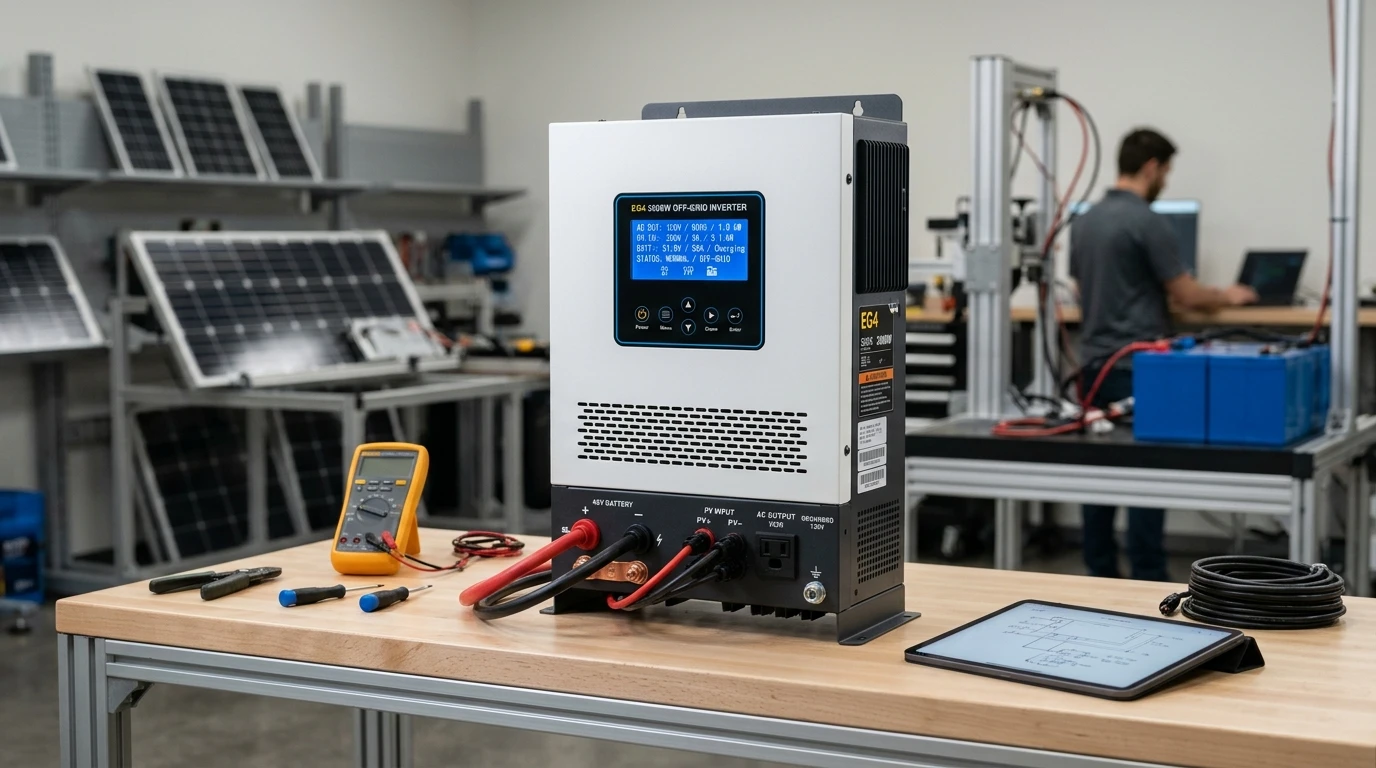
The Rich Solar 3kW inverter provides a dependable, cost-effective hub for mid-sized off-grid electrical systems. Its combination of pure sine wave stability, high-voltage MPPT tracking, and straightforward terminal connections makes it a versatile choice for DIYers and professional installers alike.
- ✓ Excellent conversion efficiency averaging around 92.5%
- ✓ Wide high-voltage MPPT range simplifies solar string wiring
- ✓ Clean pure sine wave output safe for sensitive electronics
- ✕ Cooling fans become loud under heavy continuous loads
- ✕ Basic LCD menu interface lacks advanced remote smartphone telemetry
Final Verdict & Buying Recommendations
The Rich Solar 3kW Inverter proves to be a reliable and high-performing piece of power equipment rather than a budget dud. Its ability to deliver stable pure sine wave output, combined with an efficient high-voltage MPPT charge controller, makes it a formidable contender in the off-grid market. While the cooling fans generate noticeable noise under heavy strain and the monitoring interface is purely utilitarian, these compromises are easily justified by its accessible price point.
- Choose the Rich Solar 3kW Inverter if you are building a budget-conscious 24V off-grid cabin, workshop, or emergency backup system and need dependable continuous AC power combined with a capable solar charge controller.
- Consider Alternatives like Premium Modular Inverters if your installation requires whisper-quiet operation in a living space, advanced cloud-based mobile app monitoring, or expandable split-phase 240V capabilities.