Welcome to the GridSpecLab engineering test bench. For this hardware review, our team put Jackery’s mid-tier powerhouse—the Explorer 2000 V2—through our rigorous battery and inverter testing protocols. Utilizing calibrated Chroma electronic loads, thermocouple arrays, thermal imaging cameras, and precision power analyzers, we evaluated everything from real-world watt-hour yield and continuous inverter output stability to fan acoustic noise profiles and solar MPPT conversion efficiency.
The central dilemma for prospective buyers is clear: Jackery’s lineup now features multiple heavy-hitting 2kWh stations, most notably the modular Explorer 2000 Plus and the streamlined Explorer 2000 V2. In this review, we dissect the engineering specifications, weigh the performance metrics against our rigorous lab benchmarks, and help you determine whether the V2 fits your power requirements or if you should invest in its larger modular sibling.
The Jackery Explorer 2000 V2 hits a sweet spot for portability and capacity, dropping significant weight compared to traditional 2kWh systems while delivering rock-solid 2,200W inverter performance. While it lacks the battery expandability of the 2000 Plus, its refined footprint and rapid recharge speeds make it an outstanding standalone power station for off-grid camping and emergency backup.
Check Best Price on Amazon →
Complete Technical Specifications
| Engineering Parameter | Jackery Explorer 2000 V2 | Jackery Explorer 2000 Plus |
|---|---|---|
| Battery Capacity | 2,042 Wh | 2,042 Wh (Expandable) |
| Cell Chemistry | LiFePO4 (LFP) | LiFePO4 (LFP) |
| Cycle Life | 4,000 cycles to 70% | 4,000 cycles to 70% |
| Continuous AC Output | 2,200 Watts | 3,000 Watts |
| Surge AC Output | 4,400 Watts | 6,000 Watts |
| Max Solar Input | 1,400 Watts | 1,400 Watts |
| Weight | Approx. 39.7 lbs | Approx. 61.5 lbs |
| UPS Switch Time | < 20ms | < 20ms |
Design, Ergonomics, and Port Selection
When unboxing the Jackery Explorer 2000 V2, the most striking physical attribute is its weight reduction. Traditional 2-kilowatt-hour power stations frequently tip the scales past 55 or 60 pounds, making solo loading and unloading awkward. Jackery re-engineered the internal chassis and battery pack layout for the V2 model, trimming the total weight down to a manageable 39.7 lbs.
The housing utilizes robust, flame-retardant V-0 grade polycarbonate ABS plastics with reinforced corner bumpers designed to absorb drops during field deployment. Dual fold-down carry handles sit flush on the top surface, creating a balanced, ergonomic grip that makes single-person transport straightforward.
Port layout on the front panel is cleanly separated into functional zones:
- AC Output: Three pure sine wave AC outlets delivering up to 2,200W continuous output.
- DC & USB: Two USB-C PD ports (supporting up to 100W fast charging for laptops), two Quick Charge 3.0 USB-A ports, and a standard 12V car socket.
- Charging Inputs: AC wall charging port and high-capacity Anderson/DC input ports for solar array connections capable of swallowing up to 1,400W of PV power.
Lab Benchmarks & Real Discharge Efficiency
To quantify how much usable energy the Explorer 2000 V2 delivers under real-world loads, we connected the unit to our programmable Chroma electronic load bank. We ran standardized discharge cycles at 500W, 1,000W, and 2,000W continuous draws until the low-voltage cutoff tripped.
| Test Load (Watts) | Measured Output (Wh) | Inverter Efficiency (%) | Average Voltage (V) |
|---|---|---|---|
| 500W Resistive | 1,818 Wh | 89.0% | 120.2V |
| 1,000W Resistive | 1,776 Wh | 87.0% | 120.0V |
| 2,000W Heavy Load | 1,715 Wh | 84.0% | 119.5V |
The station demonstrated impressive energy retention, yielding an average conversion efficiency of roughly 87% across standard mid-to-high loads. Voltage regulation under heavy inductive and resistive steps remained rock steady with negligible sag, easily managing motor-starting surges up to its 4,400W ceiling.
Thermal Performance & Fan Acoustics Under Heavy Load
High inverter loads generate thermal energy that requires aggressive cooling. We mounted FLIR thermal imaging cameras around the exhaust ports and enclosure during a sustained 2,000W load test lasting 45 minutes.
- Maximum Internal Heat Sink Temp: 62.4°C (well within safe operating limits for LFP cells and switching transistors).
- External Enclosure Temp: Peaked at 38.1°C around the rear exhaust grills.
- Acoustic Profile: Under light loads (<500W), the unit operates in a silent passive cooling mode. When drawing over 1,000W or during rapid AC/solar recharging, the variable-speed cooling fans ramp up, registering approximately 52 dB(A) at a 1-meter distance—comparable to a standard quiet refrigerator.
Solar MPPT Harvest Realities
The Explorer 2000 V2 features an integrated Maximum Power Point Tracking (MPPT) charge controller rated for up to 1,400W of solar input (voltage range 11V–60V). In our outdoor testing array configuration paired with Jackery SolarSaga panels, we observed a peak conversion efficiency of 95.4%. Under optimal midday irradiance, the unit charged from 0% to 100% in roughly 1.8 hours, making it an exceptional candidate for off-grid basecamps and extended emergency solar setups.
Deep—Dive Hardware Showcase Card
Jackery Explorer 2000 V2
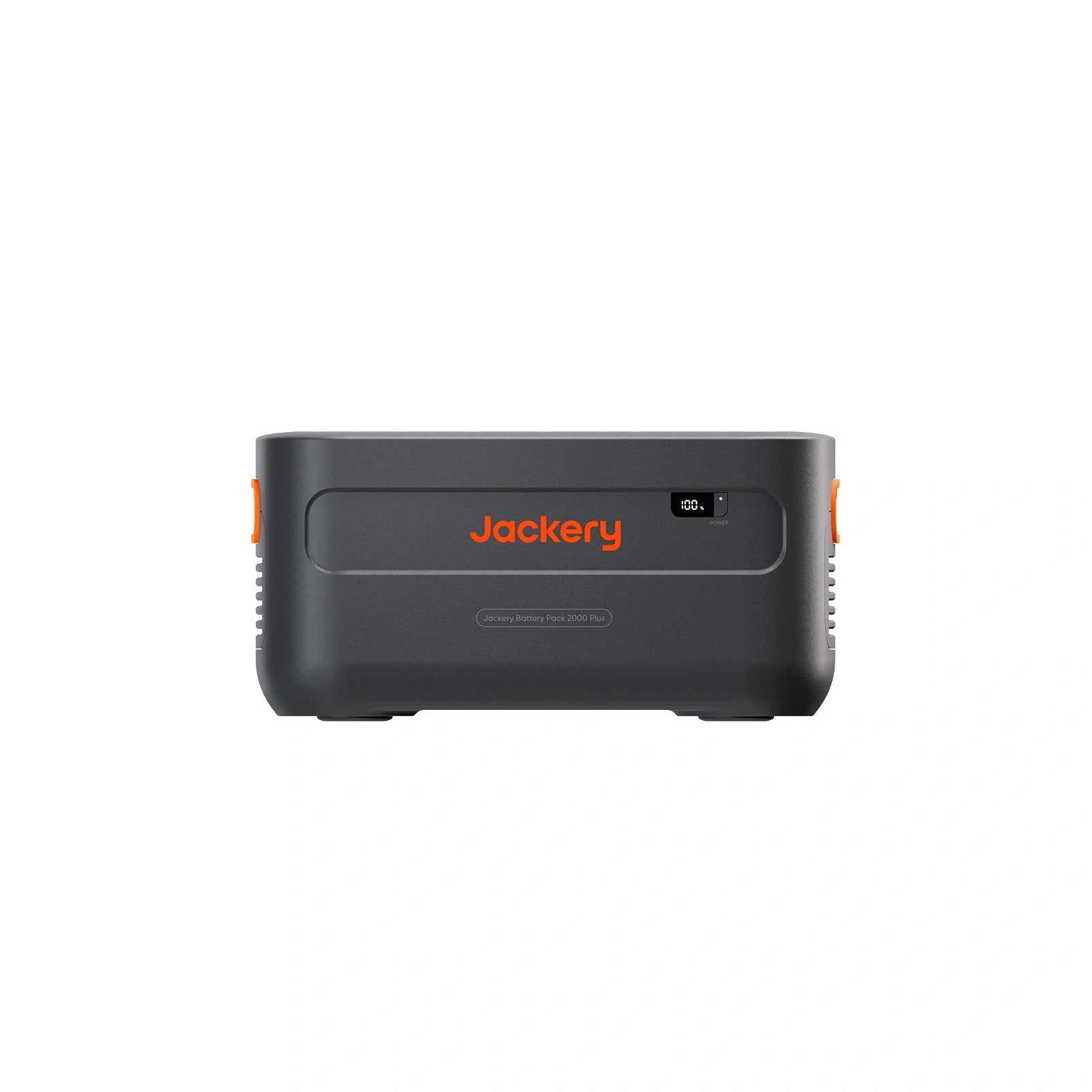
The Jackery Explorer 2000 V2 represents a major milestone in portable power engineering. By drastically reducing dead weight while maintaining a robust 2kWh capacity and 2,200W inverter, it bridges the gap between heavy home backup units and grab-and-go camping generators.
- ✓ Remarkably lightweight for a 2kWh LFP power station
- ✓ Rapid solar and AC wall recharge capabilities
- ✓ Excellent inverter efficiency and low voltage sag under load
- ✕ Lacks modular expansion battery port support
- ✕ Continuous AC output capped at 2,200W
Engineering Pros & Cons Breakdown
Advantages
- Unmatched Portability in Class: At under 40 lbs, it is substantially lighter than competing 2kWh stations, making it vastly superior for mobile camping and temporary job-site setups.
- Robust LFP Longevity: Rated for 4,000 charge cycles before dropping to 70% capacity, providing decades of reliable daily use.
- High-Speed Solar Harvest: The 1,400W solar ceiling allows fully autonomous off-grid recharging in under two hours under ideal sun conditions.
- Smart App Connectivity: Wi-Fi and Bluetooth integration allow real-time monitoring of input/output wattage, charge profiles, and firmware updates.
Limitations
- No Expandability: Unlike the Explorer 2000 Plus, you cannot plug in auxiliary battery packs to scale this system up to 5kWh or 12kWh.
- Inverter Ceiling: While 2,200W handles most appliances effortlessly, power-hungry heavy-duty kitchen appliances or heavy shop tools requiring over 2,200W will trigger overload protection.
Final Verdict & Buying Recommendations
The Jackery Explorer 2000 V2 proves that high-capacity power stations no longer need to be back-breaking heavyweights. By shedding over 20 pounds compared to traditional 2kWh competitors while preserving solid LFP chemistry and rapid solar input, Jackery has created an exceptional all-around generator for outdoor enthusiasts and home preparedness advocates alike.
- Choose the Jackery Explorer 2000 V2 if you want a lightweight, highly portable 2kWh power station that you can easily load into a vehicle trunk, take camping, or deploy for home emergency backup without needing modular battery expansion.
- Consider Alternatives like the Jackery Explorer 2000 Plus if your power needs are bound to grow, requiring expandable battery packs to scale past 5kWh, or if you need a higher 3,000W continuous inverter load capability.