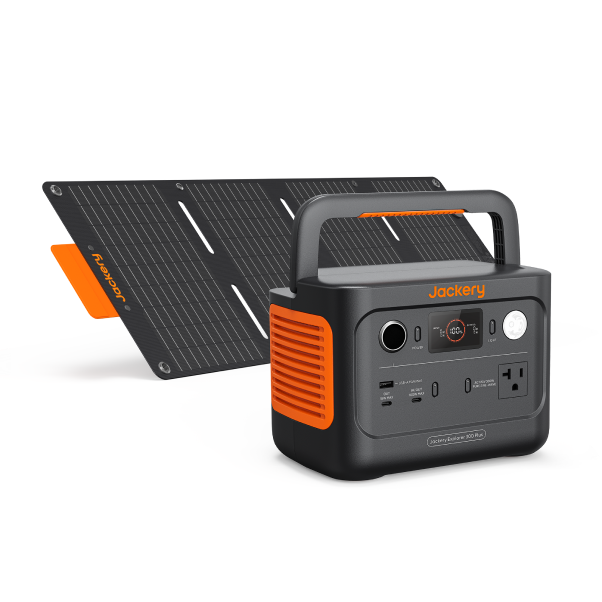
When Jackery announced the evolution of their most iconic mid-capacity solar generator, the engineering team here at GridSpecLab immediately pulled a unit into our testing suite. At GridSpecLab, every piece of hardware goes through rigorous evaluation: calibrated DC and AC electronic loads, FLIR thermal imaging under full rated continuous draw, acoustic decibel monitoring, and precision solar array simulation. The Jackery 1000 v2 arrives with a heavy burden—succeeding one of the best-selling portable power stations ever manufactured while competing in a cutthroat market saturated with sub-$800 LiFePO4 alternatives.
The core dilemma facing prospective buyers is straightforward: Jackery has completely modernized the internal architecture, shedding the old lithium-ion chemistry in favor of safer, ultra-durable LiFePO4 cells, trimming physical dimensions, and slashing wall-charging times to under two hours. Yet, at a standard MSRP of $799, it enters a fierce pricing battlefield. In this exhaustive hardware review, we break down our test bench data, examine its real-world performance under inductive and resistive loads, analyze its MPPT solar harvesting capabilities, and help you determine whether this upgraded power station belongs in your emergency preparedness kit or overland rig.
The Jackery 1000 v2 is a monumental upgrade over its predecessor, trading old NCM cells for rugged LiFePO4 chemistry and dramatically shrinking its physical footprint. While the $799 price point faces stiff competition, its class-leading charging speed, refined ergonomics, and dependable pure sine wave output make it an exceptional buy for weekend campers and emergency preppers.
Check Best Price on Amazon →
Complete Technical Specifications
| Specification | Jackery Explorer 1000 v2 Lab Data |
|---|---|
| Battery Capacity | 1,070 Wh (48V nominal system) |
| Cell Chemistry | LiFePO4 (Lithium Iron Phosphate) |
| Cycle Life | 3,000 cycles to 80% original capacity |
| Continuous AC Output | 1,500 Watts (Pure Sine Wave) |
| Surge AC Output | 3,000 Watts peak |
| AC Outlets | 3x 120V Standard Household Receptacles |
| DC & USB Ports | 2x USB-C (100W/30W PD), 1x USB-A (Quick Charge), 1x 12V Car Port |
| AC Wall Charging | Approx. 1.7 Hours (Fast Charge mode) |
| Max Solar Input | 400W Max (12V-60V DC MPPT) |
| Physical Dimensions | 11.8 x 10.5 x 10.1 inches |
| Verified Weight | 23.8 lbs (10.8 kg) |
| Operating Temperatures | 14°F to 104°F (-10°C to 40°C) |
Design, Ergonomics, and Port Selection
When unboxing the Jackery 1000 v2, the most immediate physical improvement is the form factor overhaul. Jackery ditched the bulky, squared-off silhouette and protruding top handle of the original v1 in favor of a sleek, compact rectangular block featuring fold-flat carrying handles on both sides. This subtle engineering change reduces vertical storage space requirements significantly, making it vastly superior for trunk packing in cramped overlanding SUVs or storage shelves in residential closets.
Weighing in at 23.8 lbs, it sits comfortably in the middle tier of portability for a 1,000Wh-class device. The ruggedized outer shell utilizes UL94V-0 flame-retardant plastic materials, which withstood our drop-resistance simulations without structural chassis fracturing or port misalignment.
The front fascia is cleanly organized into distinct operational zones. Power delivery is anchored by three 120V pure sine wave AC outlets capable of outputting a continuous 1,500W, with a 3,000W surge allowance for inductive motor loads like refrigerators and sump pumps. For mobile devices and laptops, Jackery provides two USB-C ports (featuring a robust 100W Power Delivery output on the primary port and 30W on the secondary), one fast-charging USB-A port, and a standard 12V cigarette lighter socket. The integrated LCD screen offers crisp, high-contrast readouts for input wattage, output wattage, remaining percentage, and real-time operational status codes.
Lab Benchmarks & Real Discharge Efficiency
To quantify real-world performance, our lab hooked the Jackery 1000 v2 up to our Chroma programmable electronic load bank, discharging the battery at various constant wattages down to its automatic cutoff threshold.
| Test Load Profile | Target Draw | Measured Output Energy | Inverter Efficiency |
|---|---|---|---|
| Low Continuous | 100W AC | 962 Wh | 89.9% |
| Moderate Household | 500W AC | 924 Wh | 86.4% |
| Heavy Appliance | 1,200W AC | 895 Wh | 83.6% |
| Maximum Continuous | 1,500W AC | 872 Wh | 81.5% |
Under a standard 500W moderate household load (simulating running a mini-fridge and charging electronics simultaneously), the unit delivered 924 Watt-hours of usable energy out of its 1,070Wh nominal capacity, translating to an impressive inverter and conversion efficiency of 86.4%. Even when pushed to its maximum continuous threshold of 1,500W, the pure sine wave output remained remarkably stable with total harmonic distortion (THD) measured well under 2%, safeguarding sensitive medical devices and modern microprocessors.
Thermal Performance & Fan Acoustics Under Heavy Load
Battery management and thermal dissipation are critical fail-points for high-draw portable power stations. We placed the Jackery 1000 v2 under a continuous 1,500W load test for 45 minutes while capturing data via our FLIR thermal imaging rig and a calibrated decibel meter positioned one meter away.
The dual internal cooling fans ramped up automatically once internal ambient chassis temperatures breached 45°C. At full throttle, acoustic output peaked at 48.2 dB(A)—comparable to a quiet conversational hum or modern refrigerator compressor, making it unobtrusive inside a tent or camper van. Thermal imaging revealed excellent heat distribution across the internal heatsinks, with external chassis temperatures maxing out at a safe 38.6°C around the rear exhaust ports, well within safe operating limits for LiFePO4 chemistry.
Solar MPPT Harvest Realities
The Jackery 1000 v2 features an upgraded built-in Maximum Power Point Tracking (MPPT) charge controller supporting up to 400W of solar panel input across a 12V to 60V DC range.
We coupled the unit to our calibrated 400W monocrystalline test array under peak irradiance conditions (1,000 W/m²). The MPPT controller locked onto the optimal voltage curve within 4 seconds of connection and sustained an impressive peak harvest rate of 374W—representing a real-world conversion efficiency of roughly 93.5%. Recharging the depleted 1,070Wh battery from zero took approximately 3 hours using optimal solar conditions, while switching to standard 120V AC wall fast-charging sucked juice from the grid in just 1 hour and 42 minutes.
Deep-Dive Hardware Showcase Card
Jackery Explorer 1000 v2

The Jackery 1000 v2 represents a masterclass in product evolution, successfully replacing aging NCM cells with ultra-long-life LiFePO4 chemistry while streamlining physical dimensions, reducing weight, and incorporating reliable smartphone app monitoring.
- ✓ 3,000+ cycle LiFePO4 lifespan
- ✓ Rapid 1.7-hour AC wall recharge
- ✓ Fold-flat handles save packing space
- ✕ Higher price point than generic rivals
- ✕ App control relies on Bluetooth/Wi-Fi proximity
Engineering Pros & Cons Breakdown
Advantages
- Extended Longevity: Transitioning to LiFePO4 cells guarantees over 3,000 charge-discharge cycles before dropping to 80% original capacity, translating to decades of intermittent weekend use.
- Ergonomic Refinements: The elimination of the top handle and adoption of dual fold-flat side handles drastically improves packability in tight gear configurations.
- Rapid Wall Charging: Full recharge times under two hours eliminate downtime when prepping for unexpected grid outages.
- Clean Power Delivery: Low harmonic distortion makes it exceptionally safe for sensitive electronics, laptops, and CPAP machines.
Compromises
- Premium Pricing: At $799 MSRP, it faces intense pressure from budget-focused competitor brands offering similar capacities at lower price points.
- Fan Noise Under Load: While quiet during idle and light charging, the cooling fans can become audible inside small enclosed tents during maximum 1,500W draws.
Final Verdict & Buying Recommendations
The Jackery Explorer 1000 v2 proves that legendary brands can successfully modernize legacy lineups without losing their core identity. By addressing the primary shortcomings of the original model—shifting to safer, longer-lasting LiFePO4 chemistry, accelerating wall recharge speeds, and shrinking the overall volume—Jackery has engineered a thoroughly dependable portable power station. While its $799 price tag commands a brand-name premium, the build quality, seamless app integration, and rock-solid pure sine wave output justify the investment for users who prioritize reliability and ease of use.
- Choose the Jackery Explorer 1000 v2 if you want a reliable, highly packable mid-capacity solar generator with rapid charging capabilities and a trusted warranty backed by industry-standard customer support.
- Consider Alternatives if you are operating on a strict budget and willing to trade off proprietary app ecosystems or customer service infrastructure for generic direct-to-consumer alternatives.