Electric bikes have revolutionized off-grid mobility, overland exploration, and daily urban commuting. But for solar enthusiasts and outdoor adventurers, the ultimate freedom comes from achieving true energy independence: powering your transportation entirely from the sun without ever touching a utility wall outlet.
To celebrate our expanding clean-energy testing community, GridSpecLab and Solar Lab are partnering to give away a brand-new GoTrax CTI 3 Electric Commuter Bike (MSRP $1,499) to one lucky subscriber!
Whether you are here to enter the official community giveaway or want to master the electrical engineering behind charging e-bikes with portable solar generators and foldable solar panels, this guide gives you everything you need.
Enter the GoTrax CTI 3 E-Bike Giveaway below! Valued at $1,499, the CTI 3 is equipped with a 500W brushless motor, hydraulic disc brakes, and a 672Wh battery. To replenish its 672Wh pack completely in the wild, you need a 1,000Wh portable power station paired with at least 200W of solar PV—taking approximately 4.5 hours in direct midday sun.
Jump to Official Entry Steps →
How to Enter the GoTrax CTI 3 Giveaway
Entering the Solar Lab / GridSpecLab 2026 E-Bike Giveaway is 100% free. No purchase, credit card, or payment of any kind is required.
Join our weekly newsletter for verified solar generator discounts, DIY electrical schematics, and lab test reports.
Counts as 1 Official Entry
Share your current off-grid, RV, or solar setup in the GridSpecLab discussion thread and tell us where you would ride the CTI 3.
Counts as 2 Bonus Entries
The winner is randomly selected via third-party certified audit software during our monthly solar lab teardown stream.
Ships Free across Contiguous US
GoTrax CTI 3: Key Engineering Specifications
Before rigging a solar charging station for any e-bike, you must inspect the electrical specifications of the battery pack and charging brick.
The GoTrax CTI 3 is engineered for commuters and weekend trail riders who demand balanced weight distribution and real-world hill-climbing power:
| Subsystem Spec | GoTrax CTI 3 Rating | Off-Grid Solar Consideration |
|---|---|---|
| Battery Chemistry & Voltage | 48V Nominal (54.6V Max) Lithium-Ion | Requires 54.6V CV/CC charger; draws 115W AC |
| Pack Total Capacity | 672 Wh (14.0 Ah) | Requires ~780Wh gross energy per full cycle |
| Rear Hub Motor Output | 500W Sustained / 750W Peak | Sufficient torque for 15-degree urban grade inclines |
| Braking System | Dual Hydraulic Disc (180mm Rotors) | Zero brake fade during steep mountain descents |
| Real-World Tested Range | 28 Miles (Throttle) / 45 Miles (PAS 2) | 1 full charge covers 2 to 3 days of typical commuting |
The Math: How to Charge an E-Bike from Solar Power
Can you plug an e-bike charger directly into a solar panel? No.
Solar panel voltage swings continuously from 15V to 50V depending on sunlight intensity, while an e-bike lithium battery requires a strictly regulated Constant Current / Constant Voltage (CC/CV) multi-stage charge curve terminating at exactly . Connecting raw solar panels directly to an e-bike battery will destroy the internal Battery Management System (BMS) or ignite a lithium fire.
Instead, the proven and safe method is using a Portable Power Station as an Energy Buffer:
Calculating Power Losses and Sizing
To fully charge a depleted 672Wh GoTrax battery:
- Charger AC Input: A standard charger delivers DC.
- Brick Inefficiency: The AC-to-DC transformer brick operates at efficiency, drawing of AC power from the socket.
- Power Station Inverter Tare + Efficiency: Portable power stations operate at inverter efficiency when driving light 100W–150W loads.
- Total Battery Drain from Power Station:
Therefore, a 1,000Wh portable power station has the exact capacity to provide one complete, 0% to 100% full recharge with a comfortable 10% safety reserve remaining.
Recommended Hardware: Top Power Stations for E-Bike Charging
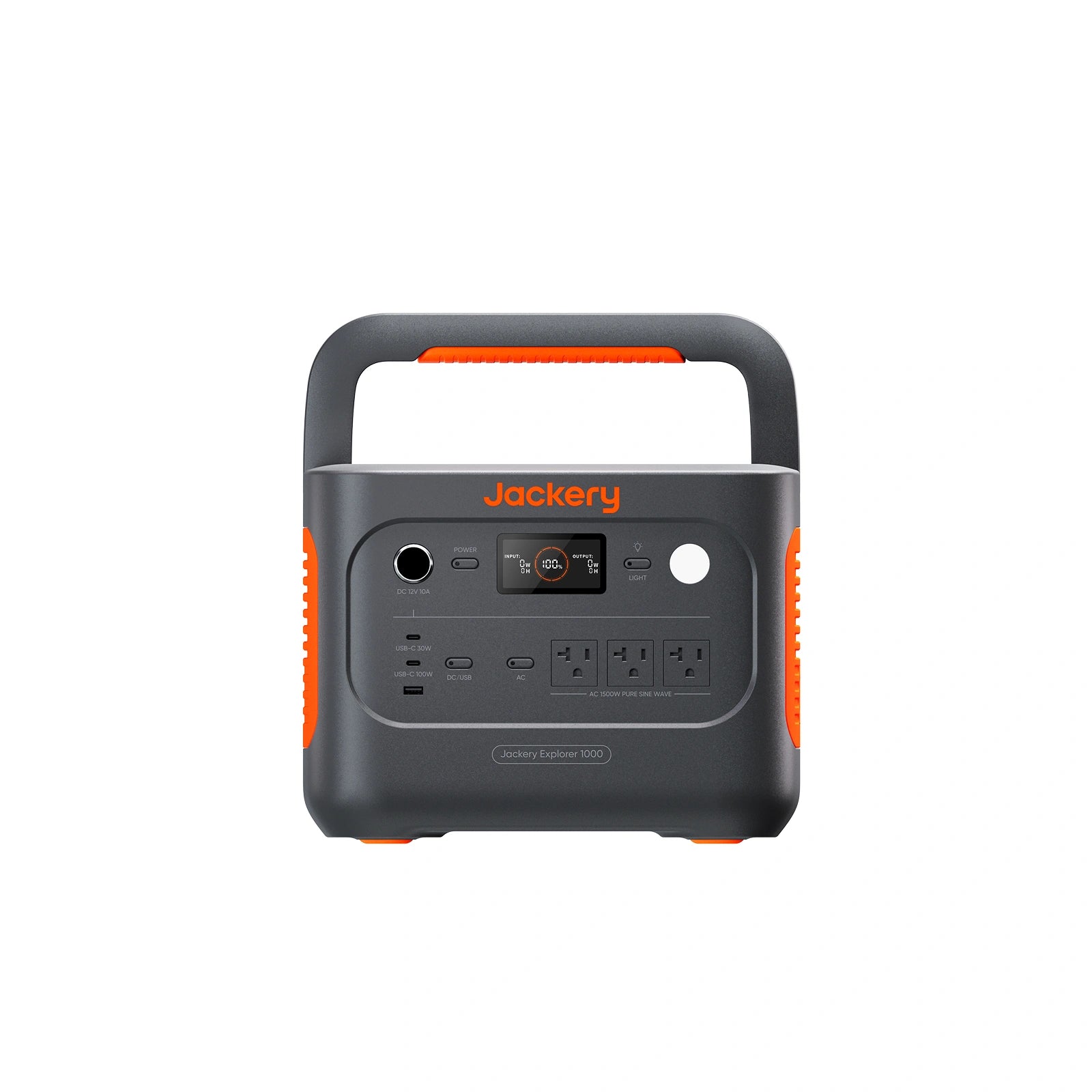
Here are the 3 top-performing portable power stations we have lab-tested for charging e-bikes and camping gear off-grid:
1. Anker SOLIX C1000 Gen 2 (Best Value & Portability)

Anker SOLIX C1000 Gen 2 (1,056Wh LiFePO4)
Weighing just 28.4 lbs with compact built-in carry handles, the C1000 is effortless to stash in an SUV trunk or RV pass-through. It features a 600W solar MPPT input and ultra-fast 58-minute AC wall recharge, allowing you to charge the GoTrax CTI 3 completely while simultaneous solar input tops the power station back up.
Check Best Price →
2. EcoFlow DELTA 2 Max (Best for Multi-Bike Camps & Extended Stays)
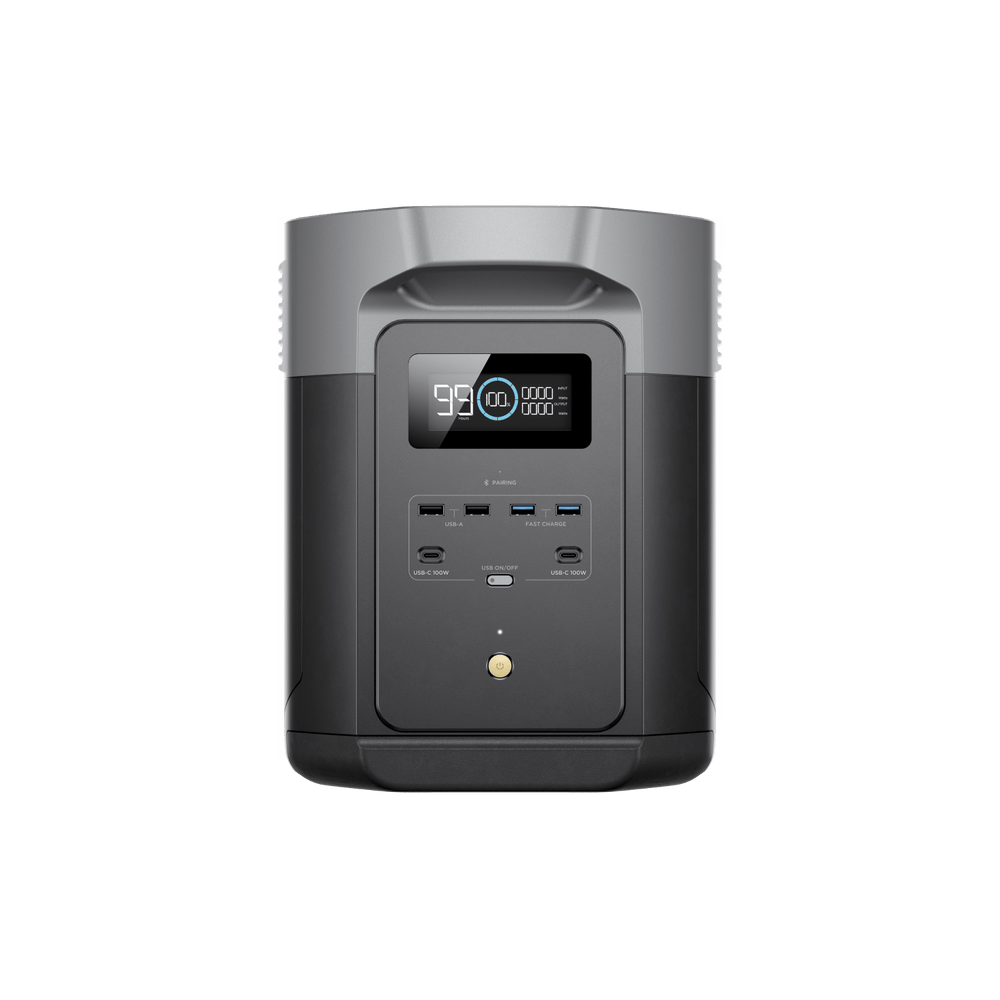
EcoFlow DELTA 2 Max (2,048Wh LiFePO4)
If you and your partner ride two e-bikes or need to power your 12V camping fridge and Starlink while recharging batteries, the 2,048Wh DELTA 2 Max is unbeatable. It delivers dual independent 500W MPPT solar ports (1,000W total solar input) and can recharge the GoTrax CTI 3 more than two and a half times on a single charge.
Check Best Price →
Critical Mistakes When Solar Charging E-Bikes
Leaving the Charger Brick Under Direct Sunlight
E-bike charging bricks already run hot during continuous 2-Amp CC charging (often reaching 120°F / 50°C internally). If left sitting on hot asphalt or exposed to direct midday sun, thermal sensors inside the brick will trigger emergency thermal shutdown or permanently degrade the electrolytic capacitors. Always keep the power station and charger in deep shade or under your vehicle.
Charging Freezing Cold Lithium Batteries
Never charge your e-bike battery if the pack temperature is below 32°F (0°C). Charging lithium-ion cells in sub-freezing temperatures causes irreversible lithium plating on the graphite anode, creating microscopic internal dendrites that permanently reduce battery capacity and risk catastrophic thermal runaway. Bring the battery inside a warm tent or vehicle cabin for 60 minutes before initiating charging.
Using Cheap Modified Sine Wave Inverters
Inexpensive 12V automotive inverters produce modified square-wave AC that generates high harmonic distortion. High-frequency noise overheats the switching MOSFETs inside e-bike charging bricks, causing audible buzzing and premature transformer burnout. Always verify that your power station or inverter outputs a certified Pure Sine Wave (THD < 3%).
Frequently Asked Questions (FAQ)
Can I charge an e-bike directly with a solar panel using a boost charge controller?
Yes, advanced DIYers can use specialized 12V/24V to 48V/54.6V Solar Boost MPPT Controllers (such as the Genasun or MPT-7210A) that wire directly between a 100W–200W solar panel and the e-bike battery charge port. This eliminates the DC-to-AC and AC-to-DC conversion losses, improving overall charging efficiency by 15% to 20%. However, this requires custom soldering of barrel/XLR connectors and strict voltage calibration to prevent overcharging.
How many solar panels do I need to charge a 672Wh e-bike in 4 hours?
To replenish 672Wh in 4 peak sun hours through a power station, you need an average continuous solar intake of approximately 200W to 250W. Because solar panels produce roughly 75% to 80% of their rated STC wattage in real-world temperatures, we recommend a 300W to 400W solar panel array (e.g., two 200W panels or one 400W rigid panel) to guarantee a full charge before afternoon shade.
Can I leave my e-bike plugged into a portable power station overnight?
Yes. Modern e-bike chargers and power stations feature automatic shutoff. Once the e-bike’s internal BMS reaches full cell saturation (), the charger drops its current draw to less than 2 Watts (trickle standby). However, remember to turn off the power station’s AC inverter in the morning to prevent idle tare loss from draining the power station battery.
When does the GoTrax CTI 3 giveaway end?
The Solar Lab / GridSpecLab GoTrax CTI 3 community giveaway runs through the end of the current quarter. Verified winners will be notified directly via registered email and announced on our official community dispatch page.