Net Energy Metering (NEM) is the single most important billing policy governing residential solar power. It determines how your utility credits you for the solar electricity you send back to the grid and how much you pay when your home draws power at night.
For over two decades, net metering was simple: it was a 1-to-1 retail trade. If your utility charged $0.30 per kilowatt-hour (kWh) for power, every excess kilowatt-hour your rooftop solar array sent back to the grid erased $0.30 from your monthly electric bill. In essence, the municipal electrical grid acted as a free, 100% efficient, unlimited battery.
However, that era of solar economics has ended.
Across the United States—spearheaded by California’s NEM 3.0 (Net Billing Tariff) and rapidly adopted by utilities across Arizona, Nevada, Texas, and the Southeast—utilities have dramatically rewritten net metering rules. Daytime export credits have been slashed by 75% to 80%, while peak evening utility rates have skyrocketed.
In this first-principles engineering and financial guide, we break down how net metering works, how bi-directional smart meters operate, the difference between NEM 1.0, 2.0, and 3.0, and how modern battery energy storage systems (BESS) protect your solar investment from utility margin erosion.
Net metering is no longer a simple 1:1 credit. In modern utility markets, exporting daytime solar earns an average of 0.08 per kWh, while drawing evening grid power costs 0.55 per kWh. Installing solar panels without a battery storage system under NEM 3.0 extends your payback period from 6 years out to 15+ years. To achieve maximum financial return, homeowners must pair solar with hybrid battery storage to enable 100% self-consumption and peak Time-of-Use (TOU) arbitrage.
Explore Whole-Home Hybrid Inverters →
True 1:1 Retail Metering
- Electric meter literally ran backwards
- No Time-of-Use peak penalties
- Batteries were economically unnecessary
- Typical solar payback: 4 to 6 years
Retail Minus Non-Bypassable Fees
- Mandatory Time-of-Use (TOU) rates
- Small interconnection fees and NBCs
- Solar-only still financially viable
- Typical solar payback: 6 to 8 years
Avoided Cost Solar Billing
- Export rates drop by ~75% vs retail
- Evening peak import rates jump to $0.50+/kWh
- Batteries mandatory for positive ROI
- Solar + Battery payback: 6 to 9 years
How Net Metering Works: Bi-Directional Power Flow
To understand net metering, you must understand the hardware sitting on your home’s exterior wall: the bi-directional smart meter.
Unlike old mechanical analog meters that simply spun in one direction to measure cumulative grid consumption, a digital net meter contains two independent electronic registers:
- Delivered (Import Register): Records every kilowatt-hour () pulled from the utility grid into your home when household consumption exceeds solar production (at night, early morning, or during heavy storm cover).
- Received (Export Register): Records every kilowatt-hour () pushed out from your home’s main distribution panel into the neighborhood grid when your rooftop solar generates more power than your home is actively consuming.
At any given second of the day, your home operates under one of three electrical states:
Solar Exceeds Consumption
Your home uses 2kW of solar power directly (behind the meter). The remaining 4kW of surplus power flows through your main service panel, spins the net meter outwards, and feeds into the utility grid, generating credits.
Consumption Exceeds Solar
Your panels provide 2kW of power. The remaining 3kW is automatically pulled from the utility grid. The smart meter records this 3kW draw on its Delivered register at current retail rates.
Night / Zero Solar
With zero solar generation, 100% of household power is drawn from the utility grid (unless you have a home battery discharging). The smart meter registers standard utility imports.
The net energy balance over your monthly billing cycle is:
Under historic 1:1 net metering, if you imported 600 kWh and exported 600 kWh, your net bill was $0 (plus a nominal $10–$15 fixed customer service charge).
The Economics: 1:1 Retail NEM vs Avoided Cost NEM 3.0
The fundamental shift rocking the solar industry is the transition from retail compensation to avoided-cost compensation.
Why Utilities Hated 1:1 Net Metering
When a utility sells you a kilowatt-hour for $0.35, that price includes:
- Generation Cost (~$0.05): The actual fuel and generator cost to produce the electricity.
- Transmission & Distribution (~$0.18): Building and maintaining high-voltage power lines, substations, neighborhood transformers, and utility poles.
- Administrative & Regulatory (~$0.12): Billing, meter reading, wildfire insurance funds, and public policy programs.
When a solar homeowner exported 1 kWh back to the grid under NEM 1.0, the utility credited them the full $0.35. Utilities argued that solar owners were using the grid infrastructure for free, shifting grid maintenance costs onto non-solar customers (renters and low-income families).
How NEM 3.0 (Net Billing) Calculates Your Bill
Under NEM 3.0, the utility decouples what they charge you from what they pay you. The export compensation rate is based on the Avoided Cost Calculator (ACC)—what it would cost the utility to purchase that electricity on the wholesale wholesale spot market:
Where:
- is the retail Time-of-Use import rate at hour (e.g. $0.38/kWh off-peak, jumping to $0.56/kWh peak between 4 PM and 9 PM).
- is the wholesale avoided cost export credit at hour (averaging just $0.05 to $0.08/kWh during sunny midday hours).
- represents non-bypassable fixed customer charges and grid interconnection fees.
The Financial Disaster of Solar-Only in NEM 3.0
Consider a typical sunny day where your home exports 30 kWh of excess midday solar and imports 25 kWh of electricity at night:
| Billing Model | Daytime Solar Export (30 kWh) | Nighttime Grid Import (25 kWh) | Net Daily Financial Result |
|---|---|---|---|
| NEM 2.0 (1:1 Retail Rate @ $0.35/kWh) | Earns +$10.50 | Costs -$8.75 | Net +$1.75 Profit (Utility owes you credit) |
| NEM 3.0 (Avoided Cost @ 0.45 Peak Import) | Earns +$1.80 | Costs -$11.25 | **Net -9.45/day!) |
Despite producing more total energy than your home consumed, under NEM 3.0 you still owe the utility almost $10 a day! Over a year, that is a $3,400 bill penalty for relying on grid exports.
The Solution: Battery Self-Consumption and Peak TOU Shifting
The only way to achieve financial independence under modern net metering is to stop exporting electricity to the grid.
Instead of sending your surplus daytime solar to the utility for a measly $0.05/kWh credit, you direct that energy into a Home Battery Energy Storage System (BESS).
Solar Direct + Battery Bank Charge
Rooftop solar powers all daytime household loads. All excess solar (4kW–8kW) charges your 14.3kWh home battery to 100%. Grid export = 0 kWh.
Battery Discharges to House
When the sun sets and utility rates spike to $0.55/kWh, your hybrid inverter switches the home over to battery power. Grid import = 0 kWh.
Residual Battery / Off-Peak Grid
Remaining battery capacity runs refrigerator and baseline loads until morning. If depleted, your home draws cheap off-peak power ($0.22/kWh).
By shifting your solar power from midday to evening, you replace power worth $0.05 on the wholesale grid with power that would have cost you $0.55 from the utility. That is a $0.50 per kilowatt-hour arbitrage spread that pays off the battery in 5 to 7 years!
Equipment Recommendations: Best Systems for Modern Net Metering
To thrive under modern net metering policies, you need hybrid inverters and closed-loop lithium iron phosphate (LiFePO4) storage systems capable of advanced Zero-Export programming, Time-of-Use arbitrage scheduling, and instant grid isolation:
1. Sol-Ark 15K Whole-Home Hybrid Inverter (Best Universal Grid-Tie & Battery Hub)

Sol-Ark 15K All-In-One Hybrid Inverter
The Sol-Ark 15K is the gold standard for grid-tied solar with battery storage. Featuring native 200A whole-home service pass-through, a massive 15,000W continuous output (24,000W 10-second surge), and ultra-precise software controls that allow you to set exact time-of-use export limits down to 10 Watts, ensuring zero exported power under NEM 3.0.
Check Best Price on Sol-Ark 15K →
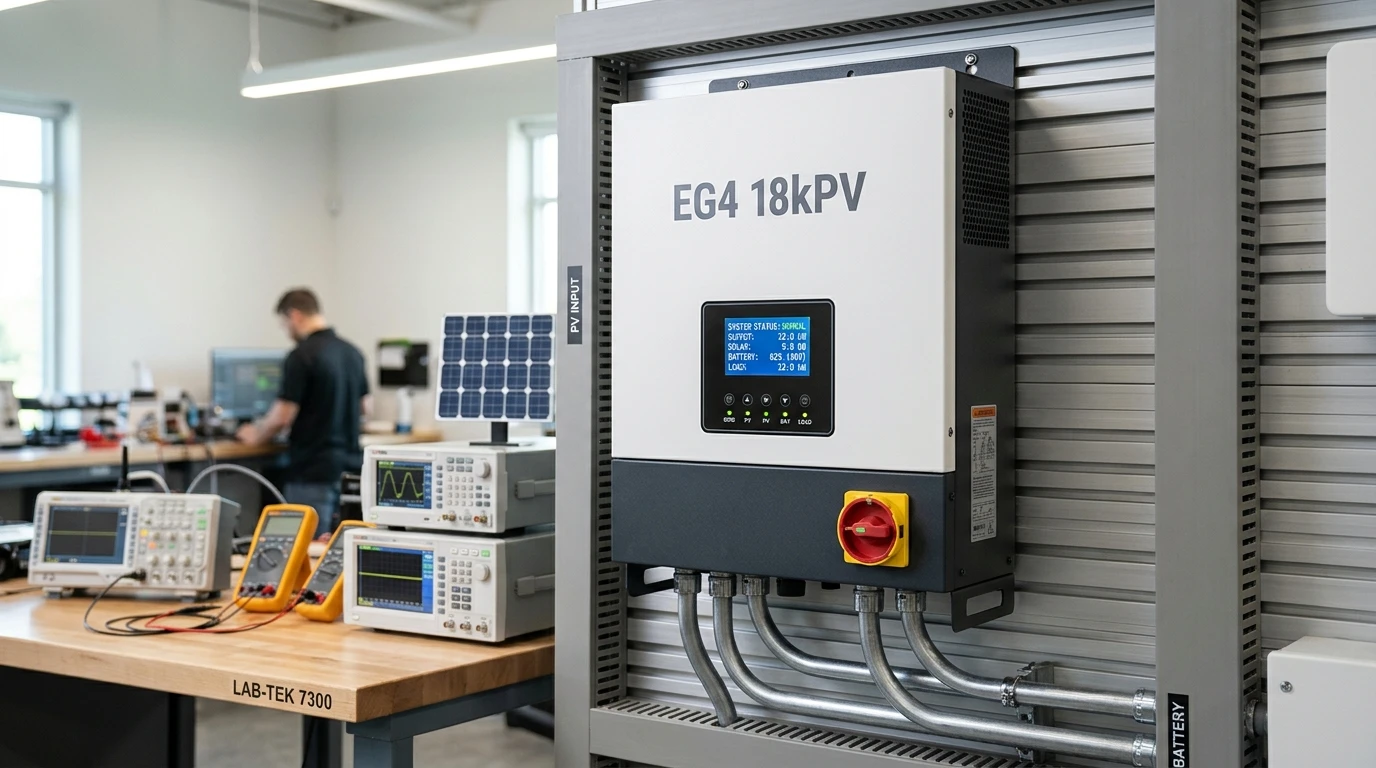
2. EG4 18kPV All-in-One Hybrid Inverter (Best Value Grid-Tie Energy Storage)
EG4 18kPV All-in-One Hybrid Inverter
The EG4 18kPV disrupted the residential solar industry by offering 12,000W continuous output, an 18,000W solar array intake capacity, and an integrated 200A whole-home transfer switch at nearly $2,000 less than legacy competitors. It fully complies with California Rule 21 and all major utility net metering interconnect standards.
Check Best Price on EG4 18kPV →
3. EG4 WallMount 14.3kWh LiFePO4 Battery (Best High-Capacity TOU Storage)

EG4 WallMount Indoor/Outdoor 14.3kWh LiFePO4
Providing 14.3 kilowatt-hours of usable energy in a sleek, wall-mountable enclosure, this battery pack is built for full-cycle daily net metering arbitrage. Delivering over 8,000 cycles, integrated heating elements for sub-freezing operation, and built-in fire suppression aerosols for total garage safety.
Check Best Price on EG4 WallMount →
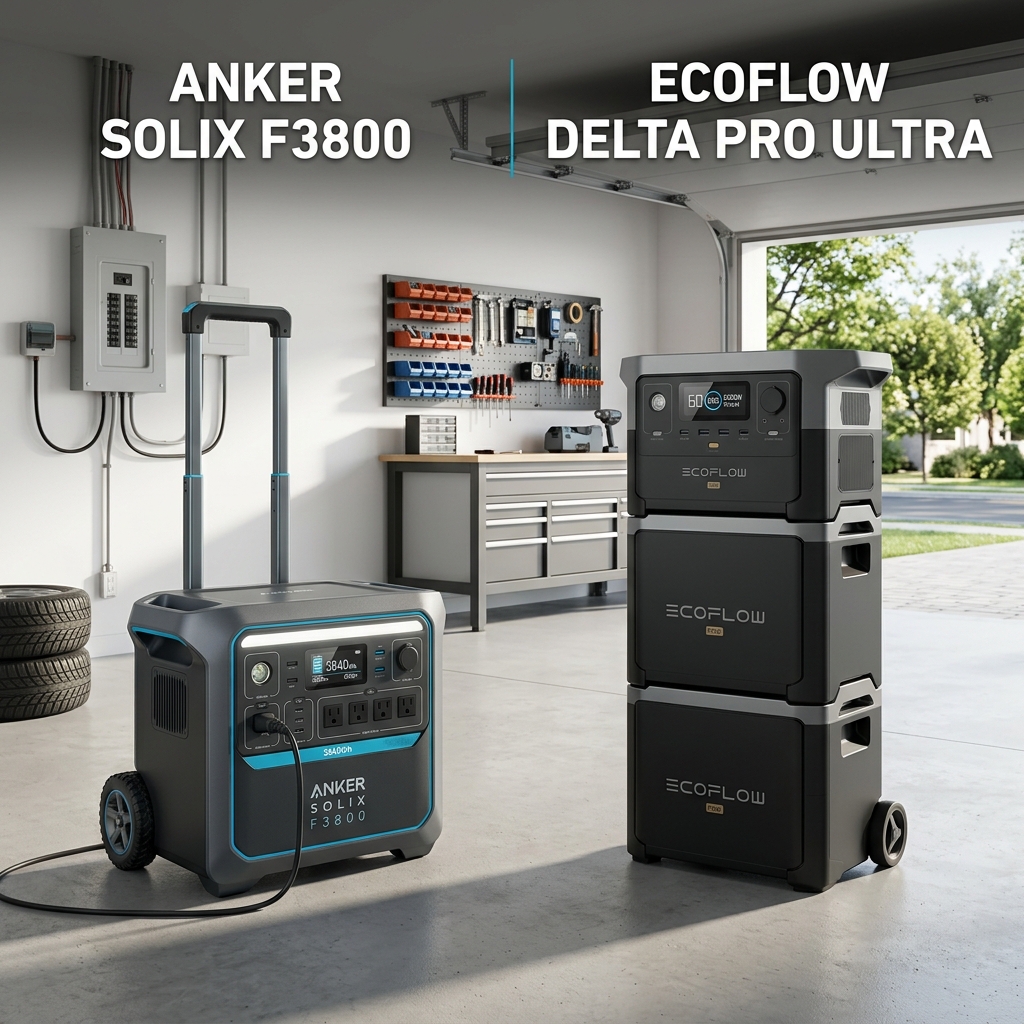
4. Anker SOLIX F3800 Home Power Backup (Best Modular Plug-and-Play Peak Shaver)
Anker SOLIX F3800 (3,840Wh / 6,000W)
For homeowners who cannot afford a permanent $15,000 whole-home hybrid installation, the Anker SOLIX F3800 connects directly into an existing manual transfer switch or generator inlet box. Its built-in smart app allows you to schedule automatic battery discharge between 4 PM and 9 PM every single evening, knocking hundreds of dollars off your monthly peak utility charges.
Check Best Price on Anker SOLIX →
Critical Net Metering Mistakes to Avoid
Navigating net metering policies requires avoiding these expensive common pitfalls:
✕ Oversizing Your Solar Array Under Net Billing
Under 1:1 net metering, building a 120% offset system was smart because surplus generated generous financial credits. Under NEM 3.0, oversizing your solar array means generating massive surplus electricity that the utility buys for pennies. Size your solar array to cover your exact daily battery replenishment needs instead.
✕ Expecting Grid-Tied Solar to Work in Blackouts
By federal safety law (UL 1741 anti-islanding protocol), a grid-tied inverter without a battery storage system and an automatic transfer switch will immediately shut down during a power outage. Even if the sun is blazing, your home will have zero power to prevent electrocuting utility line crews down the street.
✕ Forgetting the Annual “True-Up” Statement
Most net metering utilities issue monthly statements that only require payment for basic connection fees, deferring your cumulative energy debits and credits until month 12 in an annual “True-Up” statement. Homeowners who run central AC heavily without checking their cumulative balance often face shocking multi-thousand-dollar True-Up bills at the end of the year.
✕ Non-Bypassable Charges (NBCs) Ignorance
Even if your solar array generates 100% of the energy your home consumes on a gross basis, utilities apply Non-Bypassable Charges (~0.04/kWh) on every single kilowatt-hour pulled from the grid, regardless of your export credits. You cannot eliminate NBCs with solar credits—only a battery that prevents grid imports can bypass them.
Frequently Asked Questions (FAQ)
Does 1:1 net metering still exist anywhere in the United States?
Yes. Several states (such as Florida, Pennsylvania, Ohio, and parts of New York and New Jersey) still maintain 1:1 retail net metering policies. However, utilities across virtually every state are actively petitioning their public utility commissions (PUCs) to transition toward avoided-cost Net Billing Tariffs. Always check your local utility tariff schedule before signing a solar contract.
What happens to my excess solar energy credits at the end of the year?
At your annual 12-month True-Up settlement, any remaining net surplus credits are compensated at the Net Surplus Compensation (NSC) rate, which is based on rolling wholesale spot-market electricity prices—typically between $0.03 and $0.06 per kWh. The utility will either issue a check or apply a cash credit to future bills.
Why do I still receive an electric bill if I generate 100% of my electricity?
Your electric bill consists of three components: energy charges, non-bypassable volumetric charges, and fixed monthly customer connection fees ($10 to $25 per month). Even if your net energy charge is zero, you must still pay the fixed customer service fee to maintain a physical connection to the municipal grid, meter reading, and emergency line servicing.
Can I install a battery later if I install solar today?
Yes, but you will pay significantly more in electrician labor and permitting fees. Retrofitting an AC-coupled battery (like an Enphase IQ Battery or Tesla Powerwall) requires rewiring your service panel, installing a secondary gateway, and submitting a new interconnection agreement to your utility. Choosing a hybrid inverter (like the Sol-Ark 15K or EG4 18kPV) upfront lets you simply plug in 48V batteries whenever your budget allows without rewiring your solar panels.
