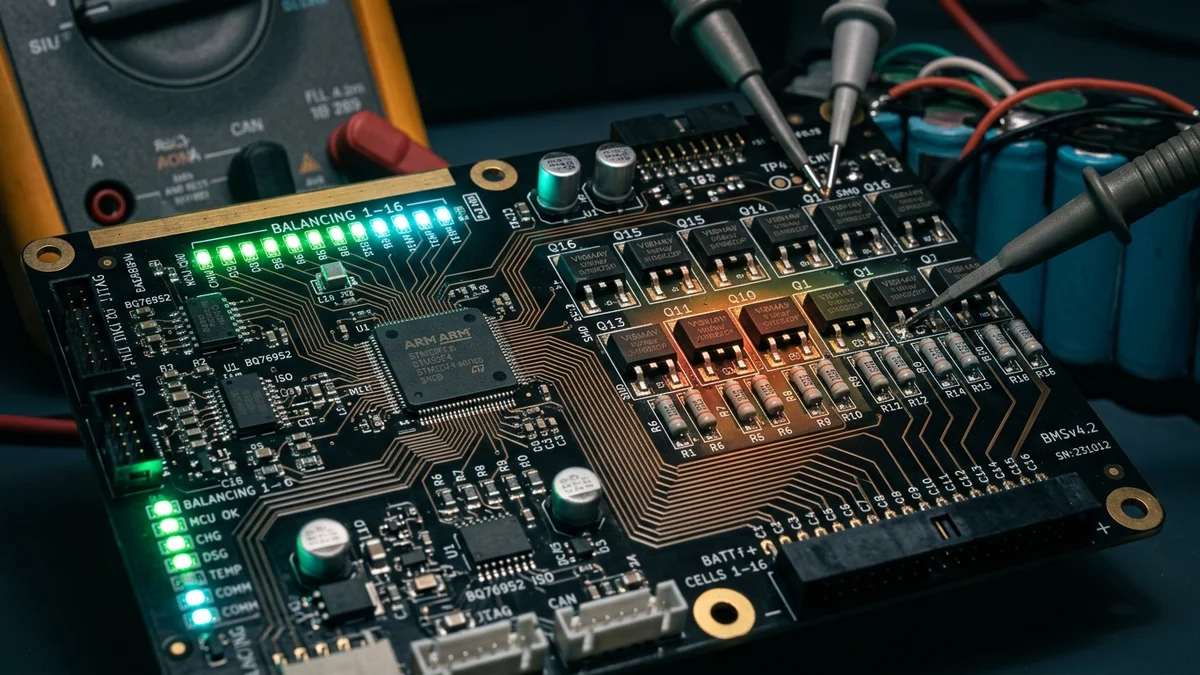
Battery Management Systems (BMS): Cell Balancing, Over-Voltage Protection & Failures
How a Battery Management System protects LiFePO4 cells. Passive vs active balancing, MOSFET disconnects, shunt monitoring, and common failure modes.
Every guide is backed by certified engineering spec sheets, KaTeX mathematical proofs, and real-world off-grid analysis.

How a Battery Management System protects LiFePO4 cells. Passive vs active balancing, MOSFET disconnects, shunt monitoring, and common failure modes.

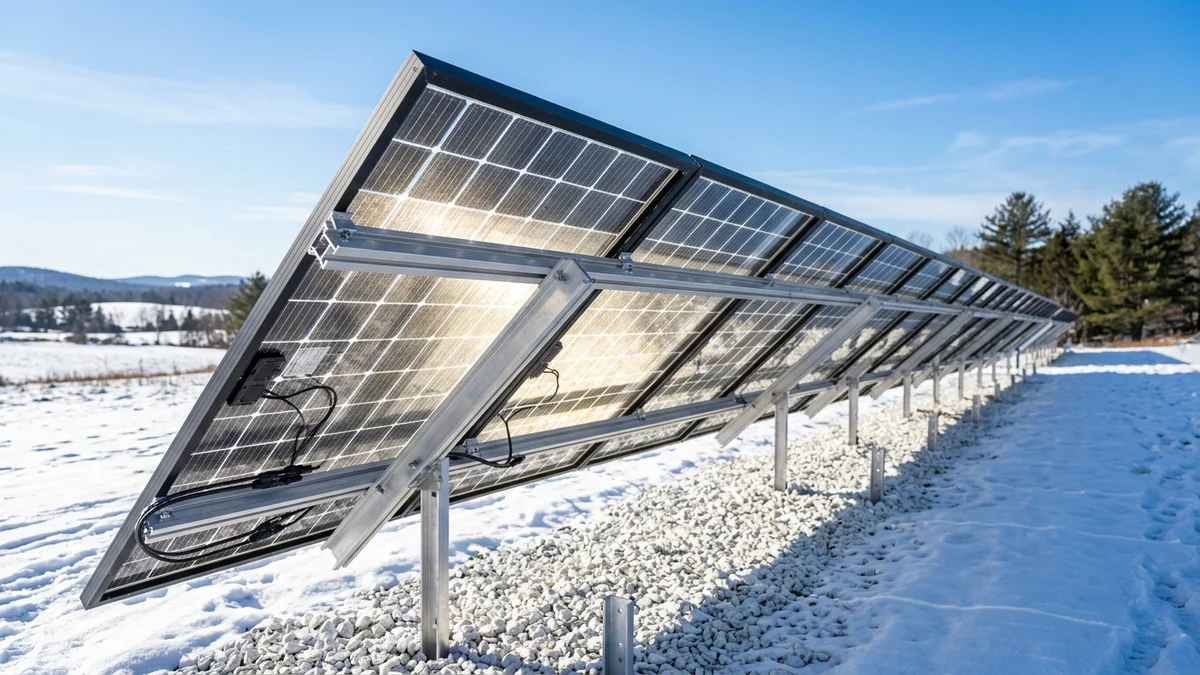
How bifacial solar panels capture reflected ground light to boost energy output by 10%–25%. Engineering albedo benchmarks across snow, grass, concrete, and gravel.

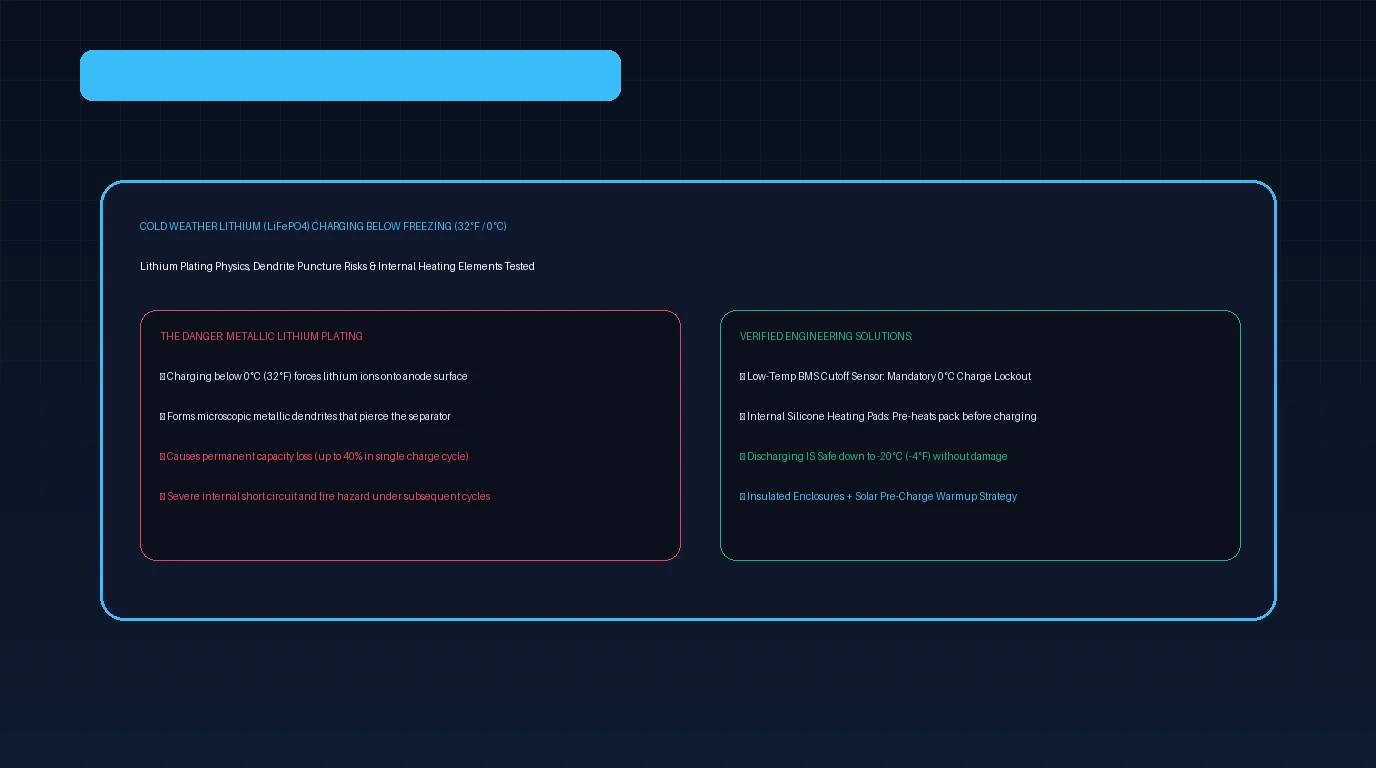
Why charging lithium batteries below freezing causes permanent lithium plating and dendrite shorts. Engineering guide to low-temp BMS cutoffs and heating pads.

Why nominal battery math fails on kitchen refrigerators. Real engineering calculations factoring compressor duty cycles, defrost heater spikes, and inverter tare loss.

Why solar generator runtime formulas fail on low-wattage loads. Engineering analysis of fixed tare loss, bell curve efficiency, and how to maximize runtime.

Why the portable power station industry transitioned to Lithium Iron Phosphate. Comparing cycle longevity (3,000+ vs 800), safety thresholds, and weight.

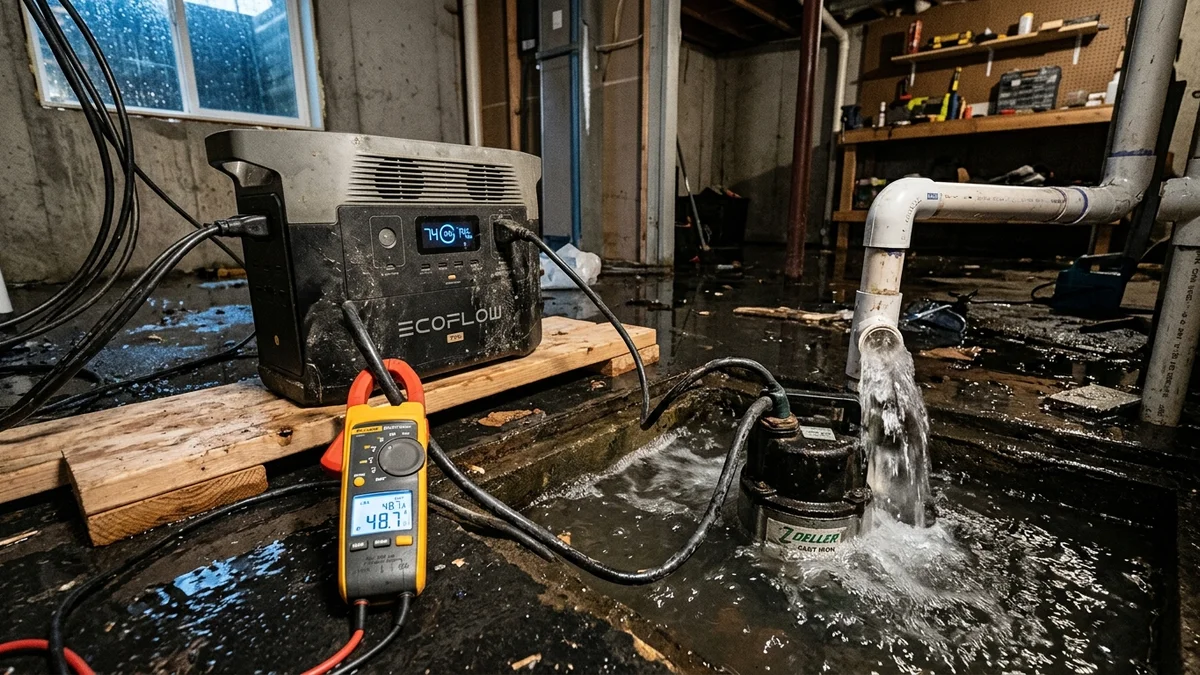
Why a 600W sump pump trips a 2,000W generator. Engineering guide to Locked Rotor Amps (LRA), inductive startup surges, and how to size power stations.

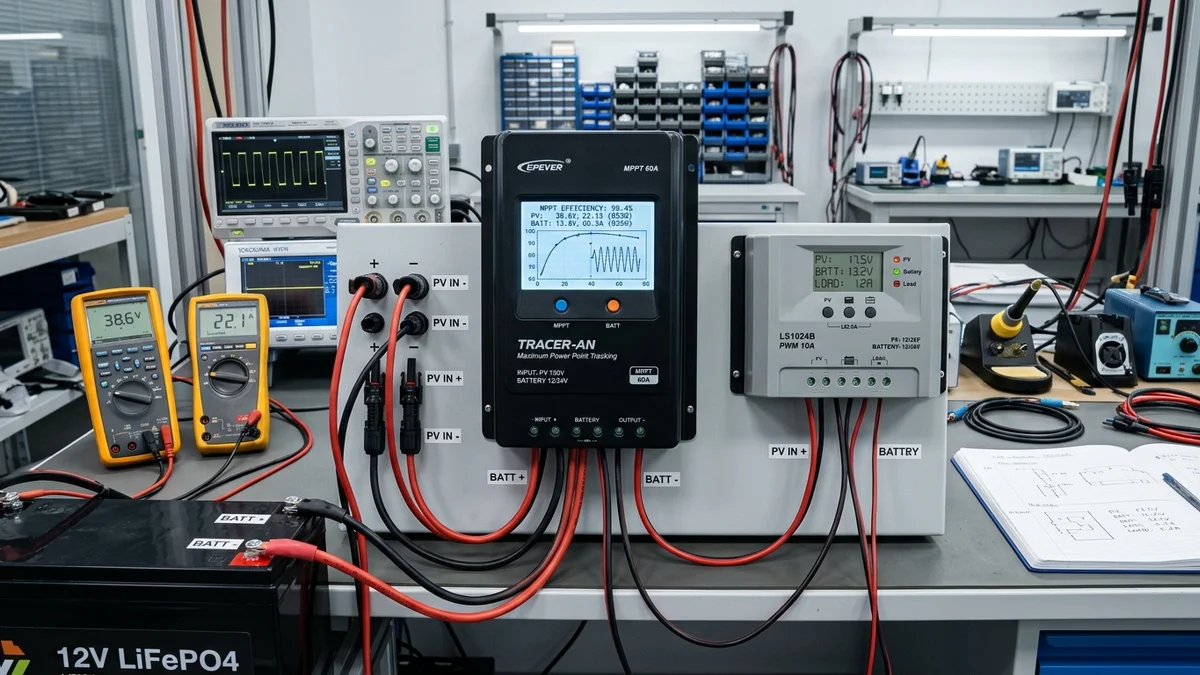
Why MPPT solar charge controllers deliver up to 35% more energy than PWM. Engineering breakdown of impedance matching, DC-DC buck conversion, and string voltage.

How to properly store a solar generator for months without ruining the battery. Optimal 50%–60% SOC storage, parasitic drain, and recalibration cycles.