With residential electricity rates climbing between 4% and 12% annually across North America, installing solar panels and home battery storage is increasingly viewed as an essential defense against rising utility bills.
However, aggressive door-to-door sales representatives often pitch misleading claims—promising that solar will “eliminate your electric bill to $0 forever” or that “the government will pay you to go solar.”
In this comprehensive 2026 financial analysis, GridSpecLab cuts through the marketing hype. We provide the exact engineering equations, real-world utility bill offset data, net metering rules, and state-by-state payback benchmarks so you know precisely how much you can expect to save before spending a single dollar on equipment.
A standard 8 kW residential solar array produces roughly 10,000 to 12,000 kWh per year, generating $1,600 to $3,200 in gross annual utility bill savings depending on your local electricity tariff. After factoring in the 30% federal clean energy tax credit, net system costs range from $14,000 to $18,000 for standalone solar, and $21,000 to $28,000 for solar plus 15 kWh of LiFePO4 battery storage. Lifetime 25-year net savings typically exceed $32,000 to $65,000, delivering an internal rate of return (IRR) of 11% to 18%—vastly outperforming traditional conservative investment bonds.
Launch Interactive Savings & Sizing Tool →
How Solar Generates Financial Savings: The Three Core Levers
Your total solar savings do not come from a single magical line item. They are generated through three distinct financial mechanisms:
Direct Self-Consumption
Every kilowatt-hour generated by your panels and consumed immediately by your air conditioner, refrigerator, or appliances is a kWh you do not buy from the utility grid at retail rates ($0.18 to $0.45/kWh).
Time-of-Use (TOU) Peak Shaving
With battery storage, you store free midday solar energy and discharge it between 4:00 PM and 9:00 PM when utility grid rates surge to their most expensive peak tiers ($0.45 to $0.62/kWh).
Utility Rate Inflation Hedge
Utility rates have risen at a compound annual rate of ~5.2% over the last decade. By generating your own power, you effectively lock in your levelized cost of energy (LCOE) at $0.06 to $0.08/kWh for 25+ years.
Baseline Energy Math: How Many Kilowatt-Hours Do You Actually Buy?
According to the US Energy Information Administration (EIA), the average American household consumes 899 kWh of electricity per month, totaling approximately 10,788 kWh per year.
To calculate your personal annual electricity expenditure:
Here is how that same 10,788 kWh consumption translates into annual utility costs across various regions:
| Region / Utility Tier | Average Retail Rate | Annual Electric Bill | 10-Year Spend (at 4% Inflation) | 25-Year Cumulative Spend |
|---|---|---|---|---|
| Low Cost (e.g. Washington, Idaho, Utah) | $0.12 / kWh | $1,295 | $15,550 | $53,900 |
| US National Average | $0.17 / kWh | $1,834 | $22,020 | $76,380 |
| High Cost (e.g. NY, MA, CT, NJ) | $0.28 / kWh | $3,020 | $36,260 | $125,750 |
| Extreme Cost (California IOU - PG&E, SCE, SDG&E) | $0.42 / kWh | $4,531 | $54,400 | $188,700 |
Notice that over a 25-year mortgage period, an average homeowner in a moderate-to-high rate state will write checks totaling $76,000 to over $180,000 to their utility monopoly if they do nothing.
The Net Metering Shift: Why Batteries Drive 2026 Savings
Five years ago, solar economics were simple: utilities offered Net Energy Metering (NEM 1.0 and 2.0) with 1:1 retail credits. If your solar panels sent 1 kWh of excess energy to the grid at noon, you received a full $0.25 credit to buy 1 kWh back at midnight. Batteries were purely an optional luxury for blackouts.
In 2026, the policy landscape has shifted dramatically:
Net Billing & California NEM 3.0 Explained
Utilities across California, Hawaii, Arizona, and parts of the East Coast have transitioned from 1:1 net metering to Net Billing Tariffs (NBT):
- When you export excess solar to the grid at noon, the utility pays you only the avoided cost wholesale rate—typically just $0.05 to $0.08 per kWh.
- But when you consume electricity in the evening between 5:00 PM and 9:00 PM, the utility charges you full retail rates—often $0.45 to $0.60 per kWh.
- Exporting solar at $0.05 and buying it back at $0.50 destroys 80% to 90% of your potential solar savings!
The Battery Arbitrage Formula
By adding 10 kWh to 20 kWh of LiFePO4 battery storage, your system automatically captures every kilowatt-hour of surplus daytime solar. Instead of dumping power to the grid for pennies, your battery discharges during the evening peak window:
Avoids dumping power at $0.05/kWh wholesale export rate.
Eliminates grid purchases during the highest $0.52/kWh tier.
Delivers $1,400 to $2,200 in extra annual savings from battery arbitrage.
State-by-State Solar Savings and Payback Benchmarks
To calculate your estimated payback period:
Below are verified 2026 economic benchmarks for an average 8 kW residential system (with 13.5–15 kWh battery where noted) across representative US regions:
| State / Market | System Type | Gross Cost | Net Cost (after 30% ITC) | Annual Savings | Estimated Payback |
|---|---|---|---|---|---|
| California (NEM 3.0) | 8 kW Solar + 15 kWh Battery | $31,000 | $21,700 | $3,600 / yr | 6.0 Years |
| Massachusetts | 8 kW Solar (NEM 1:1 + SMART) | $23,500 | $16,450 | $2,800 / yr | 5.8 Years |
| Texas (Deregulated) | 9 kW Solar + 10 kWh Battery | $26,000 | $18,200 | $2,150 / yr | 8.4 Years |
| Florida | 8 kW Solar (1:1 Net Metering) | $21,600 | $15,120 | $1,850 / yr | 8.1 Years |
| Ohio / Midwest | 8 kW Solar (Net Metering) | $20,800 | $14,560 | $1,380 / yr | 10.5 Years |
Top Solar & Battery Systems for Maximum Savings
Whether you want an all-in-one portable system for emergency load shedding and peak shaving or a high-capacity whole-home setup, these four systems provide the highest financial ROI:

1. Anker SOLIX F3800 Home Backup System
The F3800 provides dual-voltage 120V/240V split-phase power straight out of the box. It integrates seamlessly with the Anker Home Power Panel for smart Time-of-Use rate arbitrage, automatically discharging during expensive utility peak hours. Because its base capacity is 3.84 kWh, it qualifies 100% for the 30% federal clean energy tax credit (Section 25D) even without rooftop solar panels.
Check Price & Deals →
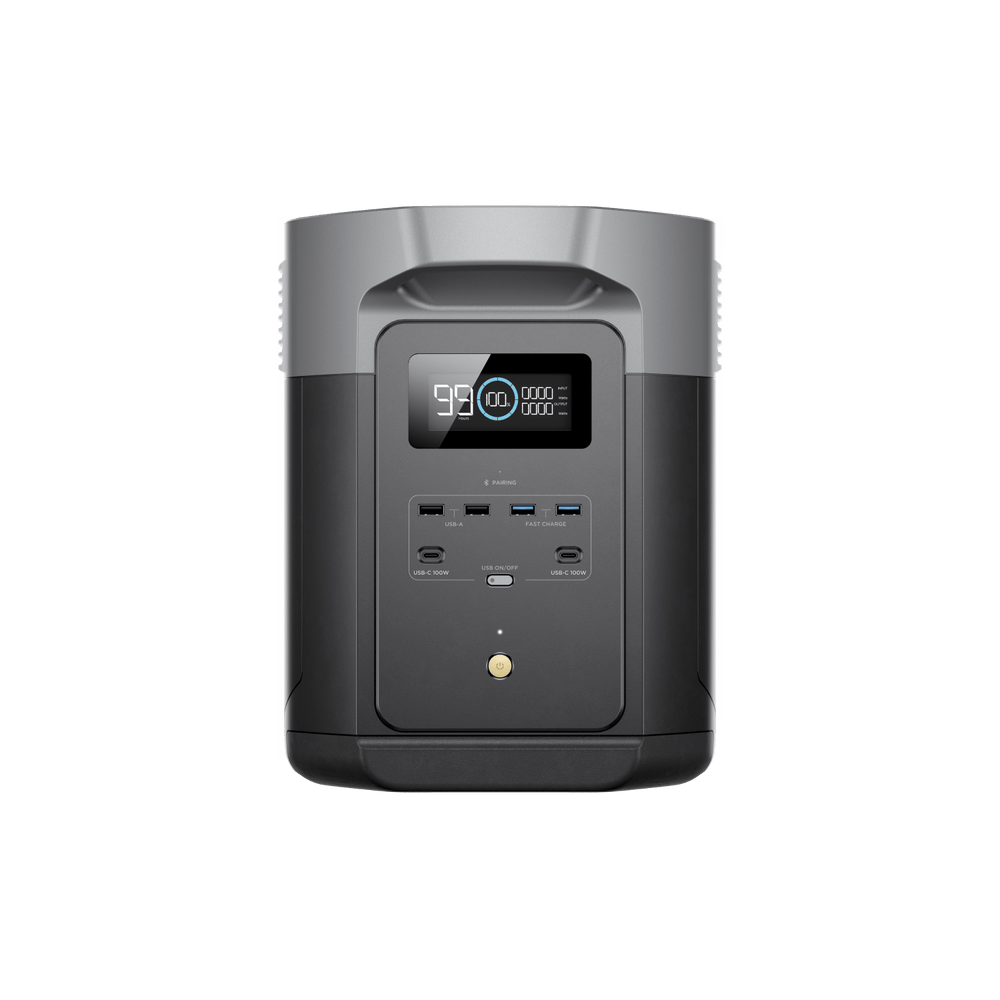
2. EcoFlow DELTA 2 Max
If you want to offset critical appliances (refrigerators, freezers, office gear) without hiring an electrician, the DELTA 2 Max is our top pick. Its dual MPPT charge controllers accept up to 1,000W of solar panels, generating up to 4.5 kWh of clean electricity daily. Expandable up to 6,144Wh with extra batteries for multi-day grid independence.
Check Price & Deals →
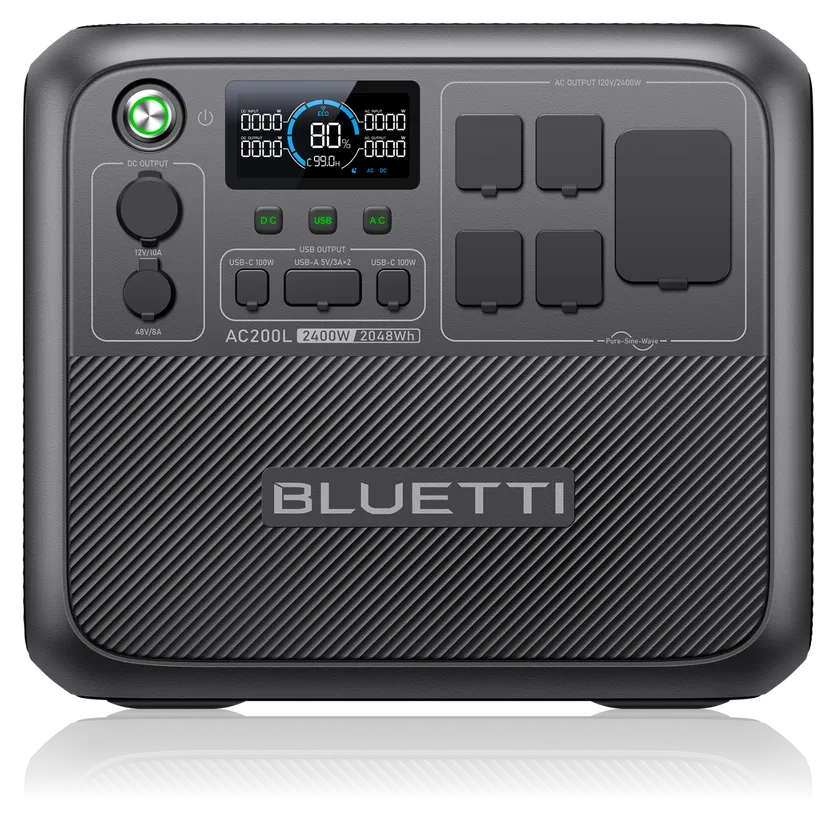
3. Bluetti AC200L
The AC200L is engineered to maximize financial savings by accepting high-voltage, low-cost residential rooftop solar panels directly into its 145V / 1,200W MPPT port. It features 2,400W continuous output, 48V DC expansion capability, and rapid 45-minute AC wall recharging during off-peak super-saver utility hours.
Check Price & Deals →

4. Anker SOLIX C1000 Gen 2
For renters or homeowners looking to offset home office and entertainment loads without permanent roof modifications. The C1000 Gen 2 pairs 1,056Wh of LiFePO4 storage with 600W of solar input for just under $600. It pays for itself in under 3.5 years when used daily to power power-hungry desktop computers, monitors, and networking gear off-grid.
Check Price & Deals →
Costly Solar Financing & Sizing Mistakes to Avoid
To maximize your 25-year financial return, avoid these four common money-losing pitfalls:
Mistake: Signing 25-Year Solar Leases or PPAs
Third-party ownership (solar leases and Power Purchase Agreements) is heavily pushed by sales reps because it yields massive commissions. However, the leasing company keeps the 30% federal tax credit, not you. Furthermore, leases contain 2.9% to 3.9% annual escalator clauses, meaning your solar payment increases every year and can create a major title encumbrance when you attempt to sell your home. Always purchase via direct cash or a low-interest solar ownership loan.
Mistake: Installing Solar Without Batteries in NEM 3.0 Markets
If you live in a utility territory with net billing or aggressive Time-of-Use rate structures, installing solar panels alone will slash your ROI in half. Surplus solar power exported during noon hours will earn pennies, while your expensive evening power purchases will remain untouched. Always pair rooftop solar with a properly sized LiFePO4 battery bank in net billing markets.
Mistake: Sizing Based on Peak Summer AC Months
Sizing your solar array to completely offset your highest July electricity bill will leave you severely overproducing in spring and autumn. If your utility only credits excess generation at wholesale avoided cost rates ($0.03–$0.06/kWh), you will pay thousands of dollars for solar panels that generate virtually zero financial return. Always size for 85% to 100% of your annual average consumption.
Mistake: Forgetting Inverter Replacement Reserves
While solar panels are warrantied for 25 to 30 years and degrade at less than 0.5% per year, central string inverters and hybrid inverters typically have useful lifespans of 12 to 15 years. Always budget a $1,500 to $2,500 replacement reserve into your 25-year cash-flow model to account for a mid-life inverter replacement.
Frequently Asked Questions (FAQ)
How much does solar actually save per month on average?
The typical US homeowner saves between $100 and $240 per month on electricity bills after installing an 8 kW solar array. In states with high utility rates (such as California, New York, or Massachusetts), monthly savings frequently exceed $300 to $450 per month, especially when paired with battery storage for peak time-of-use shaving.
Does solar increase property value or property taxes?
Yes and no. Research from the National Renewable Energy Laboratory (NREL) indicates that residential solar increases home equity by roughly $20 for every $1 in annual electricity bill savings (adding roughly $15,000 to $25,000 in home market value). Furthermore, 38 US states have property tax exemption laws that explicitly prohibit local assessors from increasing your property taxes due to solar improvements.
What happens if I move before my solar system pays for itself?
Homes with owned solar panels sell up to 4% faster and at a measurable premium compared to non-solar homes. Because you own the system outright, the remaining 20+ years of free electricity transfers to the home buyer, allowing you to recoup your net initial investment in the higher home sale price. In contrast, leased solar systems often complicate home sales because buyers must agree to assume the 25-year lease contract.
Can solar panels work without battery backup?
Yes, standard grid-tied solar systems operate without batteries. However, under safety regulations (anti-islanding per UL 1741), a grid-tied solar system without a battery shuts down immediately during a grid power outage to prevent backfeeding power that could injure utility lineworkers. To maintain power during blackouts and capture peak TOU savings, battery storage is required.