When the municipal power grid collapses during an ice storm, hurricane, or wildfire Public Safety Power Shutoff (PSPS), a reliable backup energy system is the only barrier separating your household from freezing pipes, spoiled food, and flooded basements.
Yet every winter and summer storm, emergency responders and utility crews encounter the same catastrophic errors: carbon monoxide poisonings from indoor combustion, ruined electronics from dirty modified sine wave power, and battery banks drained to 0% within hours due to hidden idle vampire loads.
At GridSpecLab, our test bench has benchmarked dozens of portable power stations, whole-home battery systems, and standby generators across prolonged blackout simulations.
Here are the six most critical power outage backup mistakes homeowners make—and the exact engineering steps to ensure your family remains powered, safe, and code-compliant.
The Core Rule: Never backfeed a home without an interlocked manual transfer switch. If you rely on well water or a 240V heat pump, verify that your backup power source outputs 120V/240V split-phase power rather than single-phase 120V. Size your inverter for motor Locked Rotor Amps (LRA) surge rather than continuous wattage, and shut off inverters overnight to stop vampire tare loss from consuming 30% of your stored battery capacity.
Using Double-Male Suicide Cords Instead of a Transfer Switch
The most dangerous shortcut in emergency power preparation is the so-called “suicide cord”—a homemade cable with male plugs on both ends, used to plug a generator directly into a dryer outlet or garage wall receptacle.
When you plug a generator into a standard wall outlet without disconnecting the main utility breaker, power travels backward through your panel, into your neighborhood utility transformer, and steps up from 240V to 7,200 to 14,400 Volts on downed overhead lines.
- Electrocutes utility linemen working on presumed “dead” lines down the road.
- Creates exposed live metal prongs on the male cord if knocked loose.
- Instantly destroys your generator the second municipal power is restored out of phase.
- Voids your homeowner insurance coverage in the event of an electrical fire.
The Code-Compliant Solution: Mechanical Interlock or Transfer Switch
To safely route backup power to your home’s breaker panel, the National Electrical Code (NEC Article 702) requires a break-before-make transfer mechanism:
- Mechanical Breaker Interlock Plate: An inexpensive metal sliding plate installed on your main distribution panel that mechanically prevents your generator backfeed breaker from switching ON until the 200A main utility disconnect is completely switched OFF.
- Dedicated Manual Transfer Switch: A pre-wired subpanel (such as a Reliance Pro/Tran 2) that isolates 6 to 10 critical circuits (refrigerator, furnace blower, sump pump, kitchen lighting) with individual 3-position toggle switches (
LINE - OFF - GEN).
Buying 120V-Only Power When You Rely on 240V Well Pumps
During a widespread blackout, running water is often more urgent than television or interior lighting. Yet thousands of suburban and rural homeowners buy 2,000Wh to 3,000Wh portable power stations only to discover they cannot get a single drop of water from their faucets.
The Split-Phase Reality
Standard residential electrical service in North America is 120V/240V Split-Phase:
- Two 120V hot legs (L1 and L2) measured 180 degrees out of phase, with a shared neutral and ground.
- Standard wall outlets tap either L1 or L2 against neutral for 120V appliances.
- High-draw motor appliances—specifically deep submersible well pumps, central air conditioning compressors, electric clothes dryers, and electric water heaters—bridge L1 and L2 simultaneously to draw 240 Volts.
Single-Phase 120V vs. Split-Phase 240V Architecture
EcoFlow DELTA 2 Max, Bluetti AC200L, Jackery 2000 Plus (single unit). Powers refrigerators, microwaves, CPAP machines, and internet routers. Cannot start 240V submersible well pumps or central AC.
Anker SOLIX F3800, EcoFlow DELTA Pro 3 / Ultra, or dual-bonded units with a 30A NEMA L14-30R receptacle. Provides true 120V/240V split-phase power for whole-house breaker panels and well pumps.
If your home relies on a private well, you must verify your pump’s voltage on its control box (usually located in the basement near the pressure tank). If it reads 230V / 240V, a standard 120V power station is completely useless for water backup.
Sizing for Continuous Running Watts Instead of Locked Rotor Amps (LRA)
A classic disaster scenario: you look at the energy label on your refrigerator or sump pump. It states: 115V, 6.0 Amps, 700 Watts. You purchase an 800W continuous inverter, plug in the pump, and the inverter immediately trips offline with an OVERLOAD fault code.
The Inrush Surge Physics
Induction motors found in refrigerators, freezers, sump pumps, well pumps, and HVAC compressors require an immense burst of power to overcome physical inertia and establish magnetic flux in their stator windings:
Where LRA (Locked Rotor Amps) is the instantaneous current drawn when the motor rotor is stationary:
| Appliance | Running Watts | Typical LRA | Peak Surge Watts (100-300ms) | Minimum Inverter Size |
|---|---|---|---|---|
| Full-Size Refrigerator | 120W – 180W | 12A – 15A | 1,400W – 1,800W | 2,000W Pure Sine |
| 1/2 HP Sump Pump | 800W – 1,050W | 20A – 28A | 2,400W – 3,200W | 3,600W Surge Rated |
| 3/4 HP Deep Well Pump | 1,200W – 1,500W | 30A – 38A (240V) | 7,200W – 9,100W | 6,000W+ Split-Phase |
To calculate whether your sump pump or compressor will trip your generator or battery inverter, test it with our Sump Pump LRA Surge Calculator and Refrigerator Runtime Calculator.
Inverter Vampire Tare Loss: The Silent Battery Killer
When homeowners buy a 2,000Wh or 3,000Wh battery power station, they often assume they can leave the AC inverter switched ON 24 hours a day to power a 150W refrigerator that cycles for 15 minutes each hour.
By the second morning, they wake up to find their battery at 0%, even though the refrigerator only consumed a total of 600Wh of running energy.
What Happened? The Tare Loss Tax
A pure sine wave inverter is an active electronic computer. To convert low-voltage DC into clean 120V/240V AC 60Hz sine waves, it continuously energizes high-frequency toroidal transformers, MOSFET transistors, sensing circuitry, and cooling fans.
This idle consumption is called Tare Loss (or Standby Vampire Draw):
- A 2,000W inverter consumes approximately 25W to 40W doing nothing.
- A 3,600W or 6,000W whole-home split-phase inverter consumes 45W to 70W idle.
In 24 hours, the inverter alone burns 1,200Wh of battery capacity just standing by, completely draining small power stations before appliances even turn on!
[!TIP] Outage Strategy: Never leave your main AC inverter running 24/7 during an emergency. Turn the AC inverter ON for 1 hour every 4 hours to chill your refrigerator, charge smartphones via native DC USB-C ports (which draw almost zero idle power), and switch the AC inverter OFF overnight.
Storing Gasoline in Cans for Months Without Fuel Stabilizer
Gasoline generators remain a popular emergency option due to their low upfront cost. However, during real winter blackouts, nearly 40% of portable gas generators fail to start because of stale fuel in the carburetor bowl.
Standard pump gasoline contains 10% to 15% ethanol (E10/E15). Ethanol is hygroscopic—it aggressively absorbs atmospheric moisture. Within 60 to 90 days, it causes phase separation, corroding jets and gumming carburetor needles with sticky varnish.
Liquid propane (LPG) in standard 20 lb or 100 lb BBQ tanks never expires, contains zero ethanol, leaves no gummy residue in fuel lines, and can sit stored safely for 20+ years ready for immediate winter ignition.
If you must store gasoline:
- Always add high-grade marine fuel stabilizer (like Sta-Bil Marine) immediately upon filling cans.
- Run your generator dry before storing it by shutting off the fuel valve and letting the engine stall to empty the carburetor bowl.
- Better yet, upgrade to a dual-fuel smart inverter generator that pairs cleanly with solar battery banks.
Zero Redundancy for Multi-Day Winter Snowstorms
Many off-grid and solar homeowners assume their rooftop solar array will recharge their home batteries indefinitely during extended outages.
However, the severe weather events that trigger prolonged grid outages—such as blizzards, freezing rain, and dense winter frontal systems—create two major solar bottlenecks:
- Physical Snow Coverage: A 3-inch layer of wet snow or glaze ice reduces solar panel irradiance to 0 Watts.
- Short Winter Sun Hours: In December and January, northern latitudes receive as little as 1.5 to 2.5 peak sun hours per day under heavy overcast skies.
A 5kW solar array that generates 25kWh on a sunny July afternoon might generate less than 2kWh on a dark December day. If your battery capacity is 10kWh and you consume 8kWh per day, your battery will be dead by Day 2 with no solar recharge in sight.
A robust power resilience strategy requires a hybrid triad:
- Tier 1: Rooftop solar for primary daily generation.
- Tier 2: LiFePO4 battery bank for silent overnight running and instantaneous UPS transfer.
- Tier 3: Dual-fuel inverter generator running on propane for rapid 2-hour bulk charging during multi-day storm blackouts.
Top Recommended Emergency Power Backup Hardware
To build a code-compliant, resilient backup system that avoids these pitfalls, we recommend the following lab-verified equipment:
1. Whole-Home 240V Battery Power Station: Anker SOLIX F3800
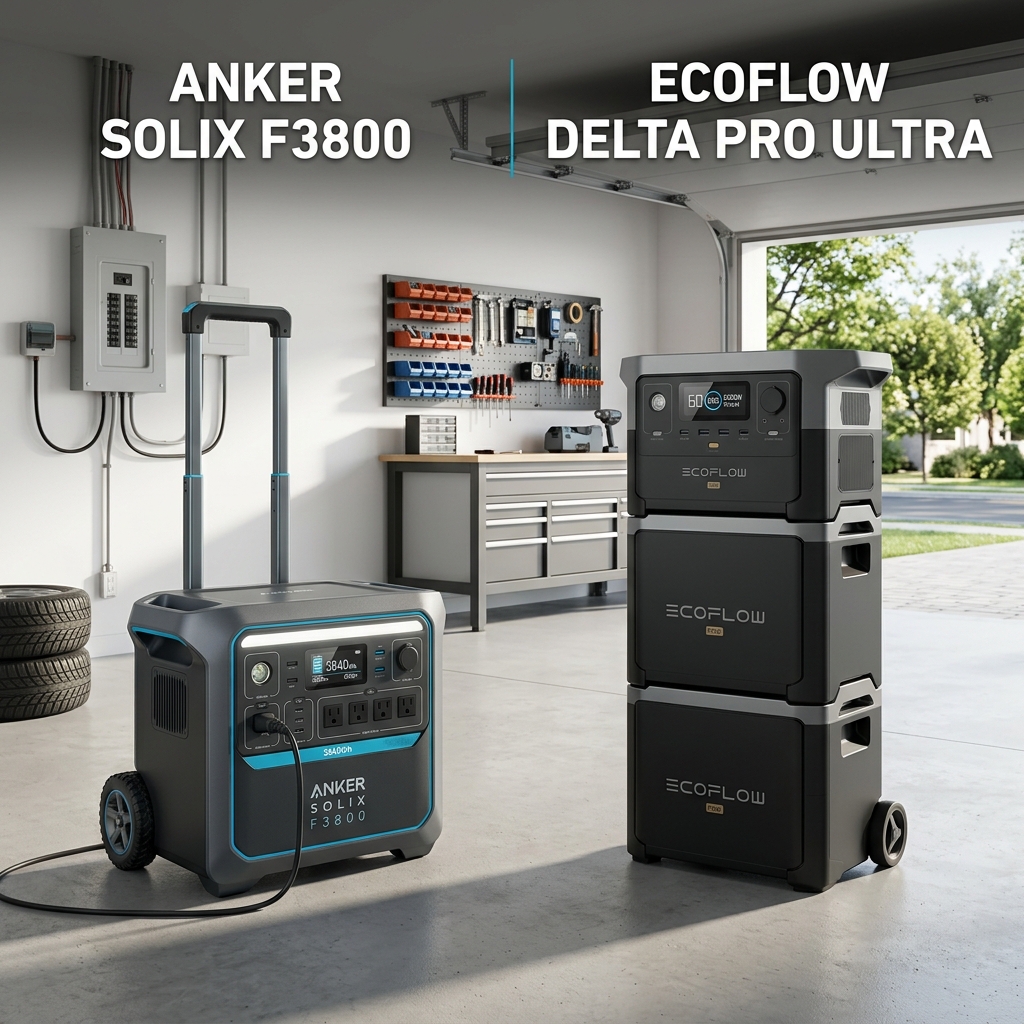
Anker SOLIX F3800 (3,840Wh / 6,000W Split-Phase)
Eliminates the 120V-only trap. Features a built-in NEMA 14-50 and L14-30R output capable of delivering true 240V power directly into your home transfer switch to run submersible well pumps, EV chargers, and split-phase panels without secondary junction boxes.
Check Current Anker F3800 Pricing →
2. Dual-Fuel DC Fast Generator: EcoFlow Smart Generator 4000 (Dual Fuel)
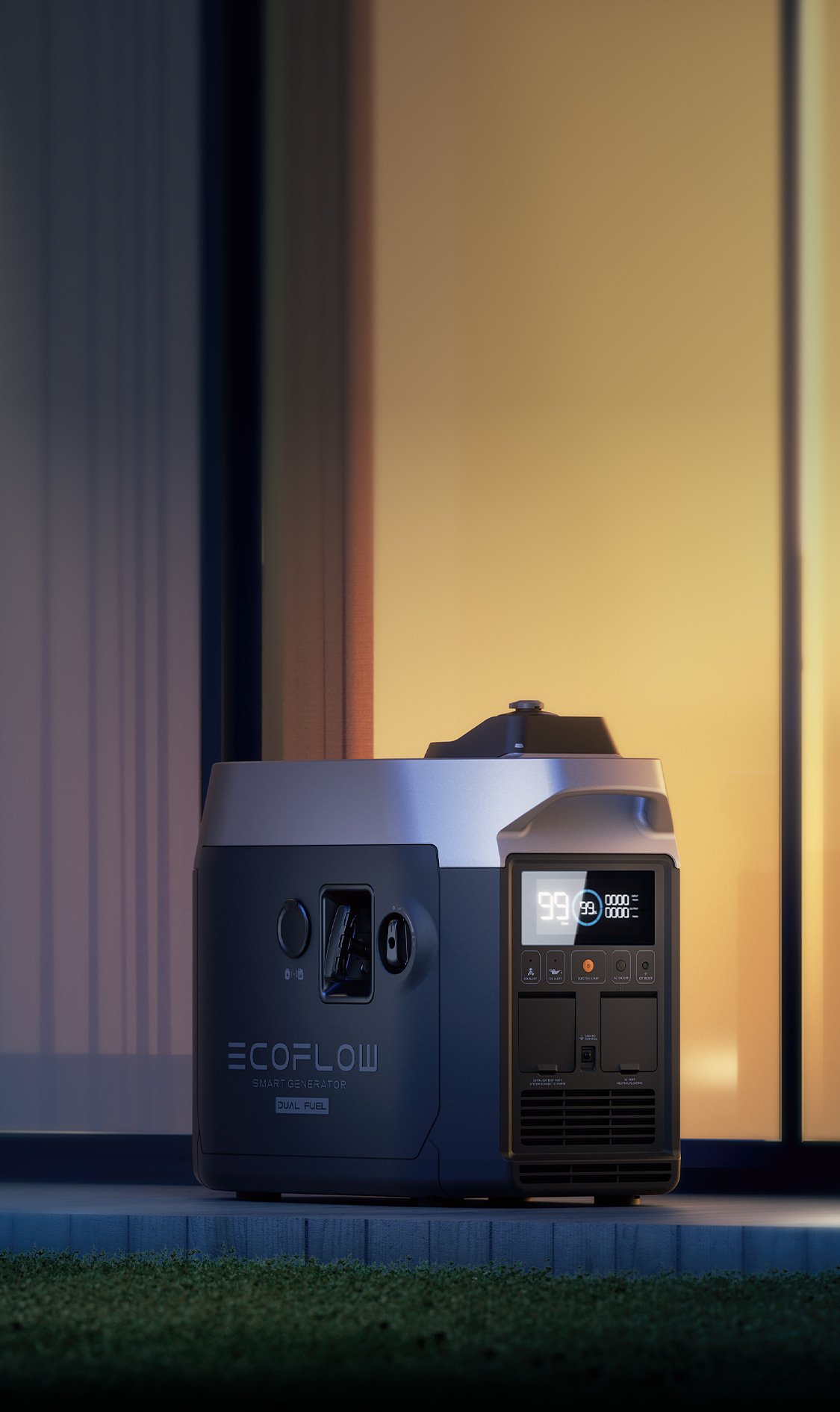
EcoFlow Smart Generator 4000 (Dual Fuel Gasoline/LPG)
Solves carburetor gumming with native liquid propane operation. Features direct DC battery charging, bypassing AC-to-DC conversion losses to charge home battery systems with 15% greater fuel efficiency than standard gas generators.
View Dual-Fuel Generator Deals →
Interactive Emergency Runtime & Load Sizing Calculators
Accurately calculate your backup needs before the next storm with our engineering calculators:
- Solar Generator Runtime Calculator: Calculate true battery runtime factoring in appliance duty cycles and inverter tare loss.
- Sump Pump LRA Surge Calculator: Determine if your emergency inverter can handle induction motor locked rotor amps without tripping.
- Inverter Tare Loss Calculator: Measure the 24-hour vampire draw of your backup power station.
Frequently Asked Questions (FAQ)
Can I run a portable generator inside my garage if the door is open?
No. Never operate any combustion engine inside a home, garage, shed, or enclosed space under any circumstances. Carbon monoxide (CO) is an odorless, invisible, lethal gas that rapidly penetrates drywall and living spaces. Generators must be placed outdoors at least 20 feet away from doors, windows, and fresh air intake vents.
What is the difference between a bonded neutral and a floating neutral generator?
In a standard home breaker panel, the neutral wire and ground wire are bonded together at the main service disconnect. When connecting a portable generator through an interlocked breaker or transfer switch that does not switch neutral conductors, the generator must have a floating neutral to avoid an illegal parallel neutral-to-ground loop. If you are using the generator standalone on a job site with extension cords, OSHA requires a bonded neutral.
How often should I test my emergency backup power system?
Test your backup power system at least once every 90 days. For battery stations, discharge them down to 20% and recharge to 80% to keep cell chemistry healthy and calibrate the Battery Management System (BMS). For gas or propane generators, run them under a 50% electrical load (such as a space heater) for 20 minutes to prevent moisture buildup in the engine oil.
Will a modified sine wave inverter damage my modern appliances?
Yes. Cheap modified sine wave inverters produce a choppy, stepped square wave. While simple resistive heating elements (incandescent bulbs, toasters) can run on modified sine, sensitive electronics, variable-speed furnace blower motors, CPAP machines, and digital refrigerator compressor boards will overheat, buzz loudly, or fail prematurely. Always purchase a Pure Sine Wave inverter for home backup.
