Heating a residential structure during deep sub-zero winter cold waves represents the ultimate challenge for off-grid renewable power systems. While heating an off-grid cabin with biomass or propane preserves battery storage for critical electrical loads, an increasing number of modern homesteaders and high-efficiency home builders are seeking total fossil-fuel independence through cold-climate heat pumps.
Air-source heat pumps function as thermal amplifiers: rather than converting raw electrical energy into heat through inefficient resistive friction, a heat pump utilizes a closed vapor-compression refrigeration loop to harvest ambient thermal energy from outside air and pump it indoors. Under mild autumn temperatures, modern heat pumps deliver over three units of thermal heat for every single unit of electrical energy consumed.
However, operating a central heat pump or multi-zone mini-split on an off-grid solar and battery system introduces severe electrical hurdles. Induction motor compressor startup draws massive momentary surge spikes, seasonal cold temperatures drastically degrade thermal efficiency, and auxiliary electric heat strips can instantly collapse a high-capacity lithium battery bank.
This engineering guide examines the mechanics of heat pump compressor startup, benchmarks the inrush reduction achieved by soft starter retrofits, models cold-weather Coefficient of Performance degradation curves, and details electrical lockout protocols required to maintain reliable winter heating off-grid.
Executive Summary: The Winter Thermal Challenge for Off-Grid Solar
The core dilemma of off-grid heat pump operation stems from the stark inverse correlation between solar energy availability and residential heating demand:
- Summer Cooling: Maximum cooling demand occurs simultaneously with maximum solar irradiance. Long daylight hours, high sun angles, and warm temperatures produce abundant photovoltaic power precisely when the air conditioner compressor is running.
- Winter Heating: Maximum heating demand occurs during short, cloudy days, bitter sub-zero nights, and prolonged blizzard conditions when solar generation drops to its seasonal nadir.
+-----------------------------------------------------------------------------------+
|               THE INVERSE CORRELATION: SOLAR HARVEST VS HEATING LOAD              |
+-----------------------------------------------------------------------------------+
|  July (Cooling Peak):                                                             |
|  Solar Generation:    [========================================] 35 kWh / day     |
|  AC Electrical Load:  [====================] 18 kWh / day                         |
|  SURPLUS ENERGY:      + 17 kWh (Batteries Fully Saturated Daily)                  |
|                                                                                   |
|  January (Heating Peak - Deep Freeze):                                            |
|  Solar Generation:    [======] 6 kWh / day                                        |
|  Heat Pump Load:      [========================================] 38 kWh / day     |
|  DEFICIT ENERGY:      - 32 kWh / day (Requires Massive Battery Bank or Backup)    |
+-----------------------------------------------------------------------------------+
To engineer a functional off-grid heat pump system, builders must resolve two separate engineering hurdles:
- The Instantaneous Dynamic Hurdle: Can the inverter survive the split-second inductive startup surge of the compressor motor without tripping its overcurrent protection circuit?
- The Sustained Energy Hurdle: Does the lithium battery bank and solar array possess adequate kilowatt-hour capacity to sustain the continuous heating load throughout three consecutive sunless winter days?
Compressor Thermodynamics: Single-Stage Reciprocating vs Inverter Variable Speed
The magnitude of the electrical startup hurdle depends entirely on the mechanical compressor architecture inside the outdoor condensing unit.
The Destructive Physics of Locked Rotor Amps
Standard split-system central heat pumps historically utilize single-stage or two-stage scroll or reciprocating AC induction compressors. When an induction motor is completely stationary and AC line voltage is applied across its run and start windings, there is zero counter-electromotive force (back-EMF) to oppose current flow.
During the first several alternating-current cycles (the initial fifty to one hundred and fifty milliseconds), the motor behaves as a short-circuited transformer. The current drawn from the power source is governed strictly by the low DC resistance and leakage inductance of the copper stator windings:
This locked-rotor surge is designated on every HVAC nameplate as Locked Rotor Amps (LRA). On a typical three-ton residential central heat pump:
- Running Load Amps (RLA): at 240V ()
- Locked Rotor Amps (LRA): at 240V ()
+-----------------------------------------------------------------------------------+
|                   SINGLE-STAGE INDUCTION MOTOR STARTUP SURGE                      |
+-----------------------------------------------------------------------------------+
|  100A |  /\  <--- LRA Peak: 82.5 Amps (19,800W Instantaneous Inrush)              |
|       | /  \                                                                      |
|   50A |/    \                                                                     |
|       |      \                                                                    |
|   15A |       \=================================== RLA: 13.8 Amps (Steady-State)  |
|    0A +------------------------------------------------------------------------>  |
|       0ms    100ms   200ms   300ms   400ms   500ms                                |
|                                                                                   |
|  OFF-GRID RESULT: Inverter Overcurrent Trip -> Error Code Overload Disconnect     |
+-----------------------------------------------------------------------------------+
When an off-grid split-phase solar inverter (such as an EG4 6000XP or 18KPV) encounters an instantaneous eighty-Amp surge, its internal semiconductor DC-AC switching bridge detects severe busbar voltage collapse and trips within ten to twenty milliseconds to protect its power MOSFETs from thermal rupture.
Inverter Compressor Soft-Ramping Architecture
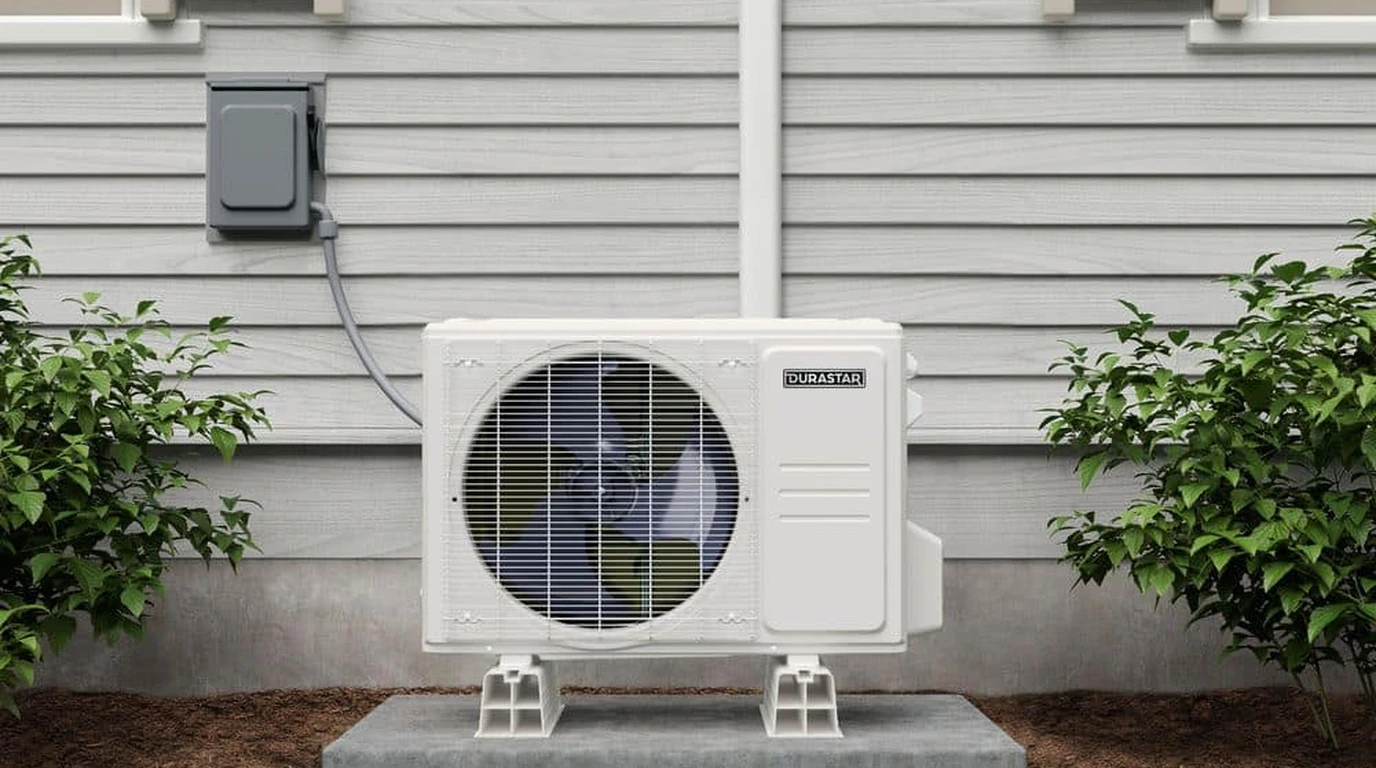
Modern cold-climate heat pumps (such as Mitsubishi Electric H2i Hyper-Heating, Fujitsu Halcyon, or Gree Flex) utilize variable-refrigerant-flow (VRF) inverter compressors:
- Incoming AC Rectification: Incoming 240V AC split-phase grid or inverter power is immediately converted into high-voltage direct current through an internal bridge rectifier and smoothed across high-capacity electrolytic filter capacitors.
- Pulse-Width Modulated Inversion: An internal microcontroller-driven Variable Frequency Drive (VFD) reconstructs three-phase variable-frequency AC power to spin a permanent-magnet brushless DC (BLDC) compressor motor.
- Soft Acceleration: Instead of slamming across the line at sixty Hertz, the compressor begins rotating smoothly at two to five Hertz. Speed is increased gradually over twenty to sixty seconds, precisely matching thermal demand.
+-----------------------------------------------------------------------------------+
|                  INVERTER VARIABLE-SPEED COMPRESSOR STARTUP                       |
+-----------------------------------------------------------------------------------+
|   25A |                                                                           |
|   20A |                                                                           |
|   15A |                          /--------------------- Maximum Load (14.2A)      |
|   10A |                         /                                                 |
|    5A |            /-----------/ Smooth Electronic Ramp                           |
|    0A +-----------/------------------------------------------------------------>  |
|       0s         10s         20s         30s         40s         50s              |
|                                                                                   |
|  OFF-GRID RESULT: Peak Inrush Never Exceeds Running Amps -> Zero Inverter Stress  |
+-----------------------------------------------------------------------------------+
In an inverter-driven system, the peak starting current never exceeds the running current. A three-ton cold-climate mini-split can be started effortlessly on a modest four-kilowatt off-grid inverter without dimming cabin lights.
Soft Starter Engineering: How Micro-Air Technology Tames Inductive Surges
For off-grid homesteaders who already possess a conventional single-stage or two-stage central heat pump and cannot justify the cost of replacing functional HVAC equipment with an inverter system, installing an advanced electronic soft starter is mandatory.
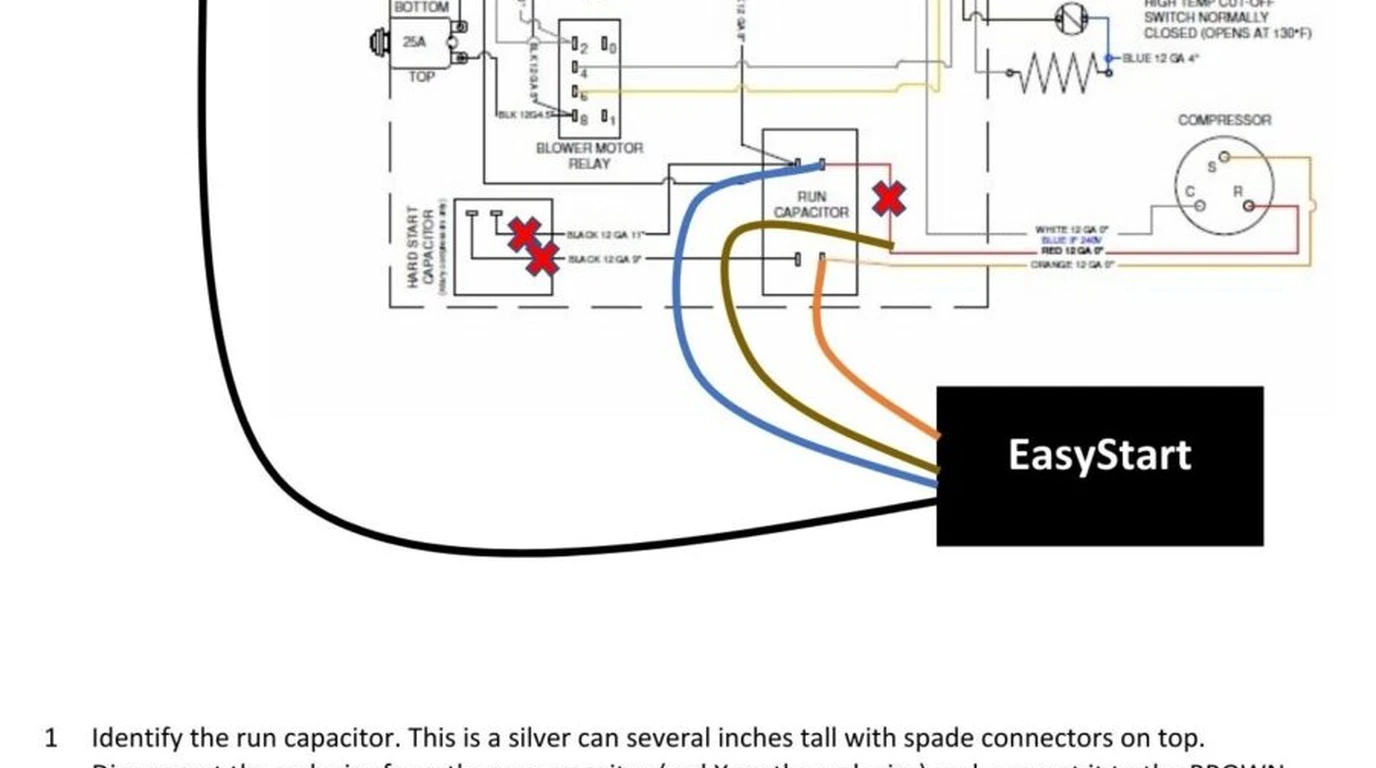
Voltage Phase Angle Slicing and Dynamic Torque Optimization
A modern microprocessor-controlled soft starter (such as the Micro-Air EasyStart 368) is fundamentally different from cheap generic start-capacitors (hard-start kits):
- Hard-Start Kits (Potential Relay + Capacitor): Simply boost starting torque by throwing an extra capacitor across the start winding for a fraction of a second. While this helps a stuck compressor start faster, it actually increases instantaneous peak current draw, worsening the surge penalty for solar inverters.
- Micro-Air Soft Starter: Employs bidirectional thyristors (TRIACs/SCRs) and an onboard microprocessor that executes active phase-angle firing. The controller chops the incoming AC sinusoidal voltage waveform during the first four to eight cycles, delivering only twenty to thirty percent of full line voltage to the motor at standstill.
- Closed-Loop Learning: The unit measures current flow on every cycle, dynamically ramping voltage over three hundred milliseconds just fast enough to overcome mechanical friction without allowing current to spike toward locked-rotor limits.
+-----------------------------------------------------------------------------------+
|            INRUSH CURRENT COMPARISON: RAW VS SOFT STARTER (3-TON UNIT)            |
+-----------------------------------------------------------------------------------+
|  Startup Method               | Peak Starting Amps | Starting Surge (Watts @ 240V)|
|  :---                         | :---               | :---                         |
|  Standard Across-the-Line     | 82.0 Amps          | 19,680 Watts                 |
|  With Hard-Start Capacitor    | 88.5 Amps          | 21,240 Watts (Worse Surge!)  |
|  With Micro-Air EasyStart 368 | 26.4 Amps          | 6,336 Watts (68% Reduction!) |
+-----------------------------------------------------------------------------------+
Sizing Off-Grid Split-Phase Inverters for Retrofitted Compressors
By suppressing peak inrush from eighty-two Amps down to twenty-six Amps, an EasyStart allows a conventional central heat pump to run on common off-grid hybrid inverters:
- EG4 6000XP (6,000W Continuous / 12,000W Surge): Can reliably start an EasyStart-equipped three-ton compressor, provided base household idling loads remain under three kilowatts during startup.
- Sol-Ark 15K or EG4 18KPV (12,000W to 15,000W Continuous): Starts an EasyStart-retrofitted heat pump with complete headroom, operating heavy kitchen appliances or well pumps concurrently without voltage flicker.
Cold-Weather Performance Degradation: Understanding the Coefficient of Performance
Once the startup surge is resolved, engineers must confront the thermodynamic reality of cold-weather heat pump operation: efficiency drops as outside temperatures fall.
The thermal efficiency of any refrigeration heating cycle is defined by the Coefficient of Performance (COP):
A heat pump operating at a COP of delivers three kilowatt-hours of thermal heat into the building envelope for every single kilowatt-hour of electrical power drawn from the battery bank.
The Carnot Cycle Penalty at Sub-Zero Temperatures
The maximum theoretical efficiency of any heat engine or heat pump is bound by the Carnot efficiency limit, determined strictly by the absolute temperature differential between the warm indoor sink () and the freezing outdoor source ():
Where temperatures are expressed in Kelvin ().
As outdoor air temperature plunges from forty-seven degrees Fahrenheit down to negative fifteen degrees Fahrenheit:
- Evaporator Pressure Collapses: The suction pressure inside the outdoor coil drops precipitously because sub-zero air contains far less thermal kinetic energy.
- Refrigerant Vapor Density Drops: Low suction pressure decreases the mass density of the vaporized refrigerant entering the compressor.
- Compression Ratio Spikes: The compressor must exert massive mechanical effort to elevate low-pressure refrigerant up to condensing pressures, consuming vastly more electrical wattage while pumping fewer pounds of refrigerant per minute.
+-----------------------------------------------------------------------------------+
|             COLD-CLIMATE HEAT PUMP COP & ELECTRICAL DRAW (24,000 BTU UNIT)         |
+-----------------------------------------------------------------------------------+
|  Outdoor Temp (°F) | Thermal Output (BTU/hr) | Real COP | Electrical Draw (Watts) |
|  :---              | :---                    | :---     | :---                    |
|  + 47°F (Mild)     | 24,000 BTU/hr           | 3.85     | 1,825 Watts             |
|  + 32°F (Freezing) | 24,000 BTU/hr           | 3.10     | 2,270 Watts             |
|  + 17°F (Cold)     | 22,500 BTU/hr           | 2.55     | 2,580 Watts             |
|  + 5°F (Deep Cold) | 20,800 BTU/hr           | 2.15     | 2,830 Watts             |
|  - 5°F (Sub-Zero)  | 18,500 BTU/hr           | 1.85     | 2,930 Watts             |
|  - 15°F (Extreme)  | 15,200 BTU/hr           | 1.60     | 2,780 Watts (Capacity Drops) |
+-----------------------------------------------------------------------------------+
Calculating Real Battery Kilowatt-Hour Draw Across Temperature Curves
Consider a well-insulated, modern off-grid home with a heating loss rate of 20,000 BTUs per hour at ten degrees Fahrenheit:
- At 47°F (COP = 3.85): Continuous electrical draw is approximately 1,520 Watts. Over a twenty-four-hour period: .
- At 10°F (COP = 2.25): Continuous electrical draw rises to 2,605 Watts. Over a twenty-four-hour period: .
A sustained cold snap nearly doubles the daily kilowatt-hour demand on the off-grid battery bank. If the homestead lacks a fifty to eighty kilowatt-hour battery bank and an oversized solar array, the heat pump will drain battery storage overnight.
The Catastrophic Auxiliary Strip Trap: Why Resistance Heat Must Be Locked Out
The single most dangerous failure mode for off-grid heat pumps is the automatic engagement of supplemental electric resistance heat strips (often labeled AUX Heat or Emergency Heat in the air handler).
The Inherent Vulnerability of Electric Strip Heating
In grid-tied suburban installations, HVAC contractors frequently install a five-kilowatt, eight-kilowatt, or ten-kilowatt nichrome resistance heat strip inside the indoor blower unit. When outdoor temperatures drop below the heat pump’s thermal balance point or during reverse-cycle defrost cycles, the thermostat automatically energizes these coils to prevent cold air delivery:
In an off-grid environment, energizing a 10kW heating coil is fatal:
- Immediate Inverter Overload: If the heat pump compressor (drawing 3kW) is running and the thermostat suddenly kicks on a 10kW heat strip, total continuous load jumps to 13,000 Watts. If the inverter is an 8kW or 10kW unit, it instantly triggers an emergency overload shutdown, cutting all household power.
- Instant Battery Evacuation: Even on a massive 15kW inverter (such as a Sol-Ark 15K), a 10kW heat strip consuming 13kW total will completely drain a forty-kilowatt-hour lithium bank in approximately three hours.
+-----------------------------------------------------------------------------------+
|               THE AUXILIARY HEAT STRIP DISASTER (10kW STRIP ENGAGED)              |
+-----------------------------------------------------------------------------------+
|  Normal Inverter Running Load (Compressor + House):         3,800 Watts           |
|  Thermostat Thermally Calls for Aux Resistance Strips:    + 10,000 Watts          |
|  -------------------------------------------------------------------------------  |
|  TOTAL INVERTER LOAD:                                      13,800 Watts           |
|  48V Battery Discharge Current:                            ~ 285 Amps Continuous  |
|  RESULT: Inverter Trips or 48V Battery Bank Depleted within 180 Minutes           |
+-----------------------------------------------------------------------------------+
Staged Breaker Disconnection and Thermostat Balance Points
To protect off-grid infrastructure, two mandatory lockout protocols must be implemented:
- Physical Circuit Breaker Disconnect: In the air handler subpanel, switch the dedicated double-pole breaker controlling the electric heat strips to the OFF position. Strip heat should never be allowed to energize automatically on solar battery power.
- Smart Thermostat Compressor Lockout: Configure an advanced smart thermostat (such as an Ecobee with outdoor weather sensor) to set the Auxiliary Heat Lockout Temperature to Disabled or set an outdoor temperature threshold that prevents resistance heating.
- Secondary Biomass or Propane Backup: When outdoor temperatures drop below the balance point where heat pump output matches home heat loss, homesteaders should ignite an airtight wood stove, pellet stove, or high-efficiency direct-vent propane space heater to carry the thermal load rather than relying on electrical resistance.
Defrost Cycle Engineering and Reverse-Cycle Surge Spikes
In cold, humid conditions (temperatures between twenty-eight and thirty-eight degrees Fahrenheit), moisture in the outdoor air freezes upon contacting the sub-freezing evaporator coil, forming a thick blanket of insulating frost.
To melt this frost, the heat pump executes an automated defrost cycle every thirty to ninety minutes:
+-----------------------------------------------------------------------------------+
|                        HEAT PUMP DEFROST CYCLE MECHANICS                          |
+-----------------------------------------------------------------------------------+
|  1. Reversing Valve Energizes: System switches abruptly into Cooling Mode.        |
|  2. Hot High-Pressure Gas diverted to outdoor coil to melt frost ice sheet.       |
|  3. Outdoor Fan Shuts Down to accelerate coil heating.                            |
|  4. Indoor Fan continues blowing air across indoor coil (which is now chilling!). |
|  5. Normal Grid-Tied Behavior: Engages 10kW strip to prevent cold indoor drafts.  |
|  6. Off-Grid Rule: Keep strips disabled; tolerate cool discharge air for 4 mins.  |
+-----------------------------------------------------------------------------------+- Reversing Valve Slam: When the four-way reversing valve shifts, high and low refrigerant pressures equalize rapidly, causing a brief mechanical groan and momentary load spike on the compressor. Inverter heat pumps handle this transition gracefully, while single-stage compressors produce a sharp current shudder.
- The Cold Blow Phenomenon: Because auxiliary resistance strips must remain locked out off-grid, the air handler will circulate relatively cool air () into the living space for three to five minutes during defrost. Homesteaders must understand that this is normal thermodynamic operation, not a system malfunction.
Comprehensive Heat Pump Sizing and Battery Storage Matrix
When integrating a cold-climate heat pump into an off-grid solar architecture, use this sizing and balance-of-system matrix:
| System Parameter | Inverter Mini-Split (1.5 to 2 Ton) | Inverter Central Heat Pump (3 Ton) | Single-Stage Central + Soft Starter |
|---|---|---|---|
| Startup Inrush Surge | Under 10 Amps (Soft ramp) | Under 18 Amps (Soft ramp) | 22 to 28 Amps (With Micro-Air) |
| Minimum Inverter Size | 5,000W Continuous Inverter | 8,000W to 10,000W Continuous | 10,000W to 12,000W Continuous |
| Running Power @ 32°F | 1,100W to 1,500W | 2,200W to 2,800W | 2,800W to 3,400W |
| Running Power @ -5°F | 1,600W to 2,100W | 3,100W to 3,800W | 3,800W to 4,500W |
| Minimum 48V Battery Bank | 20 kWh to 30 kWh | 40 kWh to 60 kWh | 50 kWh to 75 kWh |
| Auxiliary Strip Heat | Not installed (Wall heads) | Physically Locked Out | Breaker Disconnected at Panel |
| Recommended Backup | Direct-vent propane / Pellet | Airtight Wood Stove | Biomass or Propane Furnace |
Final Engineering Verdict
Operating a cold-climate heat pump entirely on off-grid solar is completely achievable with modern HVAC and power electronics, but it permits zero engineering shortcuts.
For new installations, variable-speed inverter compressors (such as Mitsubishi Hyper-Heating or Gree Flex) are the undisputed gold standard, eliminating inductive inrush spikes and operating with whisper-quiet modulation. For existing central split systems, installing a microprocessor-controlled soft starter is an absolute necessity to prevent catastrophic inverter overload shutdowns.
By physically disconnecting energy-devouring resistance heat strips, sizing 48V battery banks to endure real-world COP degradation curves, and maintaining a secondary biomass or gas backup for sub-zero emergency extremes, off-grid builders can enjoy luxurious, automated heating while preserving total energy independence.
