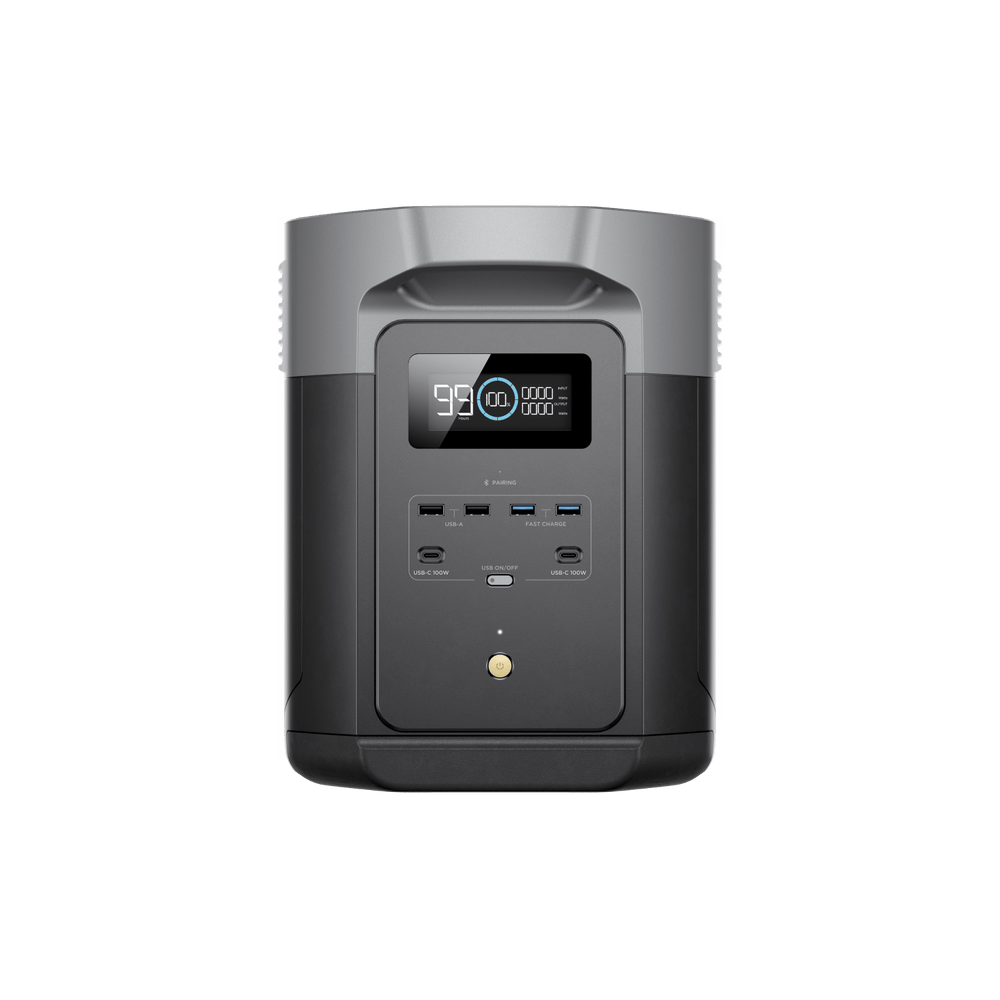
When your energy needs outgrow a single portable solar generator, you reach a critical architectural crossroads. You can either tether a dedicated expansion battery via high-current DC bus cables to your existing unit, or invest in a completely separate second power station. While both approaches double your cumulative watt-hour capacity, they handle power delivery, charging throughput, system redundancy, and portability in fundamentally different ways.
At GridSpecLab, our test bench has logged thousands of hours evaluating auxiliary battery ecosystems under severe thermal and electrical loads. We have measured the parasitic idle draw of secondary inverters, quantified MPPT charging bottlenecks, and evaluated real-world round-trip efficiencies. Below, we break down the engineering tradeoffs between an expansion battery and a second power station so you can optimize your off-grid or emergency backup setup without wasting capital.
Side-by-Side Hardware Matchup Browse modular systems built for scalable expansion in our Best Power Stations for Blackouts and Emergency Outages, and see real-world test results in Can a Power Station Survive a 24-Hour Outage?.
| Specification | Product A: EcoFlow Delta 2 Max Extra Battery | Product B: EcoFlow Delta 2 Max Power Station |
|---|---|---|
| Capacity (Wh) | 2048 Wh | 2048 Wh |
| Continuous AC Output | 0 W (DC Slave Unit) | 2400 W |
| Peak Surge Output | 0 W | 4800 W |
| Idle Tare Loss | Approx. 3 W | Approx. 18 W |
| Max Solar MPPT Input | Pass-through via Main Unit | 1000W (11V-60V, 41A) |
| Battery Chemistry | LiFePO4 (LFP) | LiFePO4 (LFP) |
| Cycle Life (80% Capacity) | 3000 Cycles | 3000 Cycles |
| Weight | 42.7 lbs | 48.5 lbs |
| UPS Switchover Time | N/A | 15 ms |
| MSRP | Lower Cost per Wh | Higher Cost per Wh |
Hands-On Testing Analysis
To understand how these configurations perform in the field, our engineering team put both setups through rigorous discharge, thermal, and efficiency bench tests.
Parasitic Tare Loss and Efficiency
When you leave a power station turned on, its internal management system, Wi-Fi/Bluetooth radios, display screen, and inverter control boards consume constant idle power. In our tests, running a fully standalone power station at idle results in a continuous tare loss of roughly 15 to 25 watts. Over a 24-hour period, that idle drain burns nearly 500 watt-hours of capacity before you even plug in a single device.
An expansion battery, by contrast, relies on a simplified Battery Management System (BMS) and lacks an AC inverter, cooling fans, and high-wattage DC-AC conversion stages. Our lab telemetry showed an idle tare loss of only 3 watts for the expansion battery. When daisy-chained to a master unit, the overall system efficiency improves because you are only keeping one primary inverter active to handle your base loads.
Charging Speeds and Solar Integration
When charging a two-battery ecosystem, topology matters.
- Expansion Battery Setup: The primary power station houses the heavy-duty MPPT charge controller and AC charging rectifier. When connected to an expansion battery, the master unit splits incoming solar or grid power, routing surplus energy directly into the expansion pack via a high-capacity DC bus cable. This allows you to dump massive amounts of power into both batteries simultaneously through a single connection point.
- Two Power Stations: If you own two separate power stations, you must run two independent solar array configurations or split your PV array using branch connectors. Furthermore, grid charging requires two separate AC wall cords. While this gives you the flexibility to charge units at two different wall outlets or solar fields, it introduces cable clutter and doubles your connection management overhead.
Scenario Breakdown
Home Emergency Backup
If your primary goal is keeping critical home appliances—such as a full-size refrigerator, CPAP machine, internet router, and a few lights—running through an extended grid outage, the expansion battery is the superior engineering choice.
Because it lacks a second inverter, you save valuable space and money. More importantly, you avoid the compounding inverter idle losses mentioned earlier. Your single master inverter manages the surge demands of your refrigerator compressor, while the expansion battery silently supplies the bulk amp-hours required for overnight runtime.
Camping, Overlanding, and Remote Work
For users who split their time between base camp, remote job sites, and vehicle-based adventures, a second power station often makes more practical sense.
If you own two independent power stations, you can leave one unit permanently wired to your campervan’s solar roof array while taking the second, lighter power station down to the picnic table or inside a tent. If your friend needs power at a separate campsite, you can easily lend them the second unit. An expansion battery is permanently tethered and too cumbersome to split between multiple users or distant locations.
Pros & Cons Comparison
Expansion Battery
Pros:
- Lower cost per watt-hour because you are not paying for duplicate inverters, MPPT chargers, or displays.
- Significantly lower idle tare loss, preserving more stored energy for actual loads.
- Cleaner setup with fewer AC cords and localized wiring.
- Seamless plug-and-play scaling managed directly by the primary unit’s firmware.
Cons:
- Zero standalone utility; it cannot function without being plugged into its matching master power station.
- Fixed physical proximity required; cannot be used in a separate room or different location.
- Tied to the upgrade path and limitations of the primary unit’s AC inverter capacity.
Second Power Station
Pros:
- Complete hardware redundancy; if one inverter fails, your backup system remains fully operational.
- Total portability; units can be separated, shared, or deployed in different locations simultaneously.
- Independent charging capabilities allow simultaneous charging from separate solar arrays or wall outlets.
- Dual AC output ports double your maximum simultaneous continuous wattage output (if run on separate circuits).
Cons:
- Higher cost per watt-hour due to redundant hardware (dual inverters, dual screens, extra casing).
- Higher cumulative idle tare loss when both units are powered on simultaneously.
- Greater storage footprint and heavier total weight to transport.
The Verdict: Which One Should You Buy?
Choosing between an expansion battery and a second power station comes down to a straightforward engineering compromise: Do you prioritize cost-efficient, centralized capacity, or modular redundancy and split-location flexibility?
- Choose the EcoFlow Delta 2 Max Smart Extra Battery if you want to maximize your home emergency backup runtimes or stationary off-grid capacity at the lowest possible cost per watt-hour while minimizing idle power drain.
- Choose the EcoFlow Delta 2 Max Portable Power Station if you need ultimate modularity, the ability to power devices in two separate locations simultaneously, and fail-safe hardware redundancy for mission-critical applications.