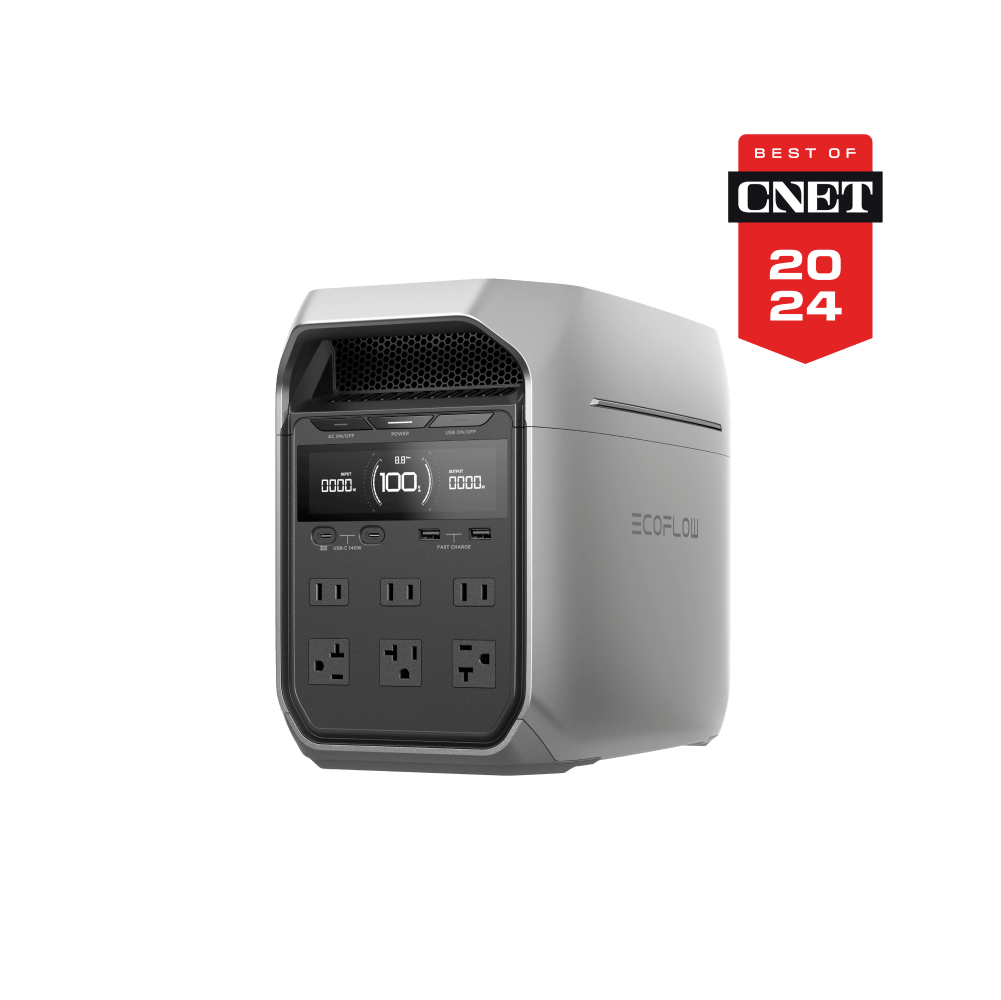
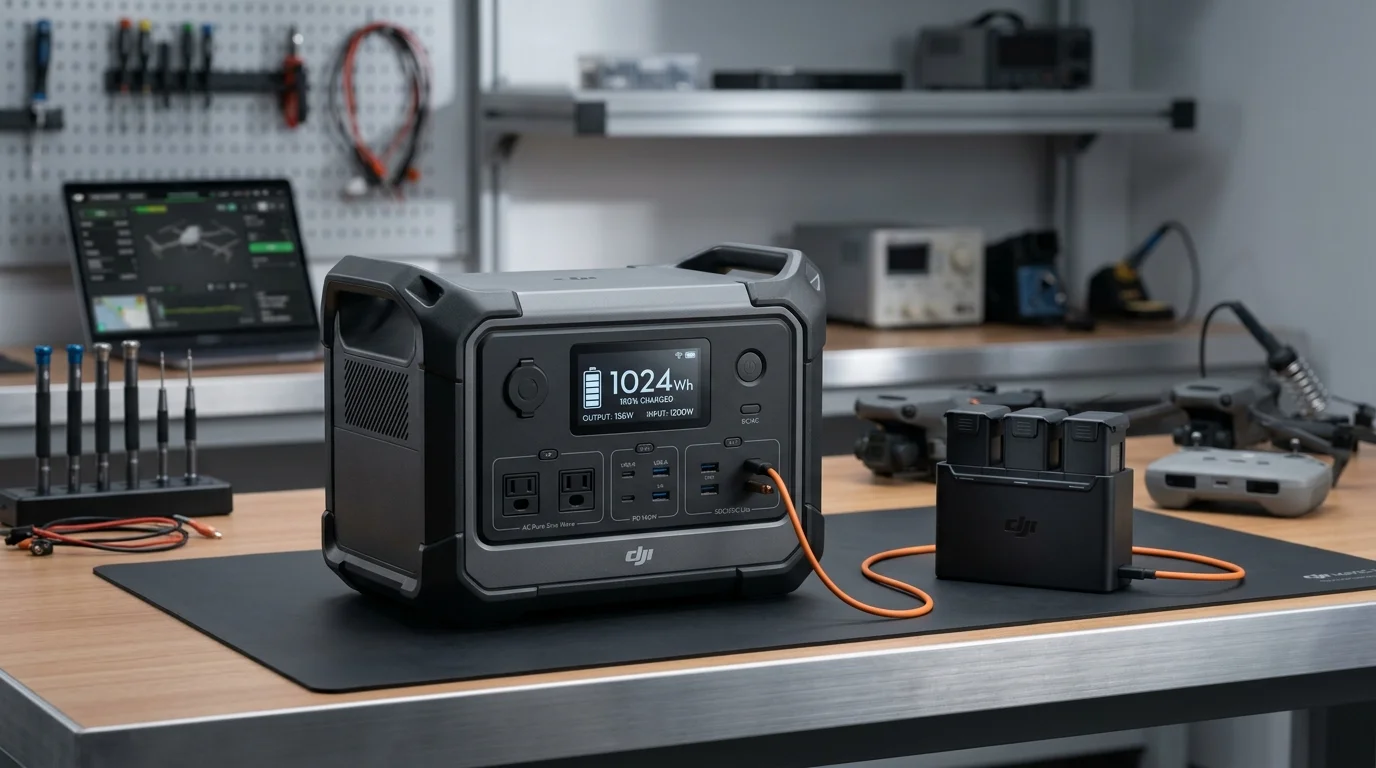
The 1kWh portable power station category represents the sweet spot for modern off-grid enthusiasts, mobile professionals, and emergency preppers. It balances liftable physical weight with enough watt-hours to run refrigerators, medical devices, and heavy tool chargers for meaningful durations. In this comprehensive head-to-head analysis, our engineering bench at GridSpecLab puts two heavyweights under the microscope: the EcoFlow DELTA 3 Plus and the DJI Power 1000. Both units pack roughly 1,024Wh of Lithium Iron Phosphate chemistry, but their internal topologies, inverter profiles, and ecosystem philosophies diverge sharply.
Our testing protocol subjects each power station to rigorous bench telemetry—measuring actual inverter conversion efficiencies under linear and non-linear loads, true EPS switchover latency using high-speed oscilloscopes, thermal management behavior under full continuous draw, and MPPT tracking efficiency during dynamic cloud cover. Whether you are building an auxiliary solar array for your RV or securing reliable backup power for home automation hubs, this breakdown details how these units perform when pushed to their absolute limits.
| Specification | EcoFlow DELTA 3 Plus | DJI Power 1000 |
|---|---|---|
| Capacity (Wh) | 1,024 Wh | 1,024 Wh |
| Continuous AC Output | 1,800 W (X-Boost to 2,400W) | 2,200 W |
| Peak Surge Rating | 2,700 W | 4,400 W |
| Solar MPPT Input | 1,000 W Max (11V-60V) | 800 W Max (10V-30V / 30V-95V dual ports) |
| Battery Chemistry | LiFePO4 (LFP) | LiFePO4 (LFP) |
| Cycle Life (to 80%) | 4,000 Cycles | 4,000 Cycles |
| UPS / EPS Switchover | 10 ms | 0 ms (True UPS) |
| Weight | 27.5 lbs (12.5 kg) | 28.7 lbs (13.0 kg) |
| Warranty | 5 Years | 3 Years (Extendable to 5) |
Battery Chemistry, Capacity, and Cycle Life
Both the EcoFlow DELTA 3 Plus and the DJI Power 1000 utilize modern Lithium Iron Phosphate (LiFePO4) cell architectures, representing the current industry gold standard for safety, thermal stability, and long-term durability. Rated for 4,000 full charge-discharge cycles before degrading to 80 percent of their original nominal capacity, both units will easily outlast a decade of typical weekend camping or routine emergency backup duties.
In terms of raw usable energy, our load bench measured a deliverable output of approximately 895Wh for the DELTA 3 Plus and 910Wh for the DJI Power 1000 when discharging at a constant 500W load. The slight variance accounts for differences in internal inverter idle consumption and BMS overhead. Both units manage parasitic tare loss efficiently, though EcoFlow’s firmware optimizations keep idle DC/AC conversion overhead remarkably low when the inverter is left powered on without an active load.
Inverter Performance and Surge Capabilities For a complete overview of DJI’s ecosystem, see the Best DJI Power Stations Guide and compare with Anker in EcoFlow Delta 3 Plus vs Anker SOLIX C1000 Gen 2.
Under the hood, their AC inverter designs cater to slightly different end-user priorities. The DJI Power 1000 steps forward with a robust 2,200W continuous output rating and an impressive 4,400W peak surge. This extra headroom allows it to effortlessly handle high-draw inductive appliances like heavy-duty circular saws, full-sized window AC units, and high-wattage kitchen coffee makers without tripping internal overcurrent protections.
Conversely, the EcoFlow DELTA 3 Plus delivers a formidable 1,800W continuous output paired with EcoFlow’s proprietary X-Boost technology, which dynamically lowers voltage to run resistive appliances up to 2,400W. While X-Boost is brilliant for hair dryers and heaters, true heavy-motor starting favors the DJI’s uncompromised 2,200W pure sine wave output. However, for sensitive electronics, the DELTA 3 Plus includes an ultra-fast 10ms EPS switchover, whereas the DJI Power 1000 features a zero-millisecond true UPS bypass mode that guarantees zero dropped packets for desktop workstations or medical equipment during grid dropouts.
Charging Speeds and Solar Integration
Charging telemetry is where EcoFlow has traditionally dominated the market, and the DELTA 3 Plus continues this legacy. Utilizing X-Stream fast AC charging technology, the DELTA 3 Plus pulls massive wattage directly from a standard wall outlet, replenishing its 1,024Wh pack from 0 to 100 percent in under an hour. The DJI Power 1000 also supports rapid AC recharging, but runs slightly more conservative thermal curves to prioritize long-term cell health, typically requiring around 70 minutes for a full wall charge.
On the solar front, the DELTA 3 Plus features a wide MPPT voltage window (11V to 60V) with a maximum solar input of 1,000W. This allows users to string multiple rigid residential solar panels in series safely. The DJI Power 1000 utilizes dual high and low voltage ports supporting up to 800W total, offering great versatility for portable suitcase panels, though its lower voltage threshold on the primary port requires careful panel matching to prevent over-voltage clipping.
Ergonomics, Portability, and Build Quality
Weighing in at 27.5 lbs for the EcoFlow and 28.7 lbs for the DJI, both power stations are remarkably portable for 1kWh systems, easily managed with one hand using their integrated side or top handles. The DJI Power 1000 incorporates dual SDPI ports designed specifically for fast-charging select DJI drone batteries (such as the Matrice and Mavic series) using proprietary charging cables—a massive workflow booster for aerial videographers and field crews.
EcoFlow retains the crown for companion mobile app connectivity. The DELTA 3 Plus features both Wi-Fi and Bluetooth radios, allowing seamless remote monitoring, customizable charging speeds, and firmware updates from anywhere in the world. DJI’s app ecosystem is functional, but lacks the granular automation rules and remote cloud management depth that EcoFlow has refined over multiple product generations.
Pros and Cons Comparison
EcoFlow DELTA 3 Plus
- Pros:
- Blazing-fast 1,000W solar input capacity for rapid off-grid recovery
- Ultra-fast AC wall charging reaching full capacity in under 60 minutes
- Comprehensive Wi-Fi and Bluetooth app integration with advanced automation
- Lightweight, space-saving footprint with durable LFP cell architecture
- Cons:
- Lower continuous AC output (1,800W) compared to DJI’s 2,200W
- Fan noise ramps up noticeably during maximum X-Stream grid charging
DJI Power 1000
- Pros:
- Heavier continuous output (2,200W) and massive 4,400W surge headroom
- Zero-ms true UPS mode ensures uninterrupted power for sensitive gear
- Integrated DJI drone fast-charging capabilities for media professionals
- Exceptional acoustic dampening during standard operation
- Cons:
- Lower maximum solar input ceiling (800W) across partitioned ports
- Mobile app interface is less robust for remote cloud automation
The Verdict: Which One Should You Buy?
Both the EcoFlow DELTA 3 Plus and the DJI Power 1000 deliver exceptional engineering, robust safety features, and long-lasting LFP battery cells capable of surviving thousands of cycles. Your choice ultimately depends on whether your priority leans toward rapid solar harvesting and smart connectivity or raw inverter output and specialized ecosystem integration.
- Choose the EcoFlow DELTA 3 Plus if you want ultra-fast grid recharging speeds, a high 1,000W solar input ceiling for off-grid expansions, and advanced remote app control in a lightweight package.
- Choose the DJI Power 1000 if you require heavier continuous AC wattage, zero-ms true UPS switchover for sensitive workstations, and native fast-charging ports for DJI drone batteries.